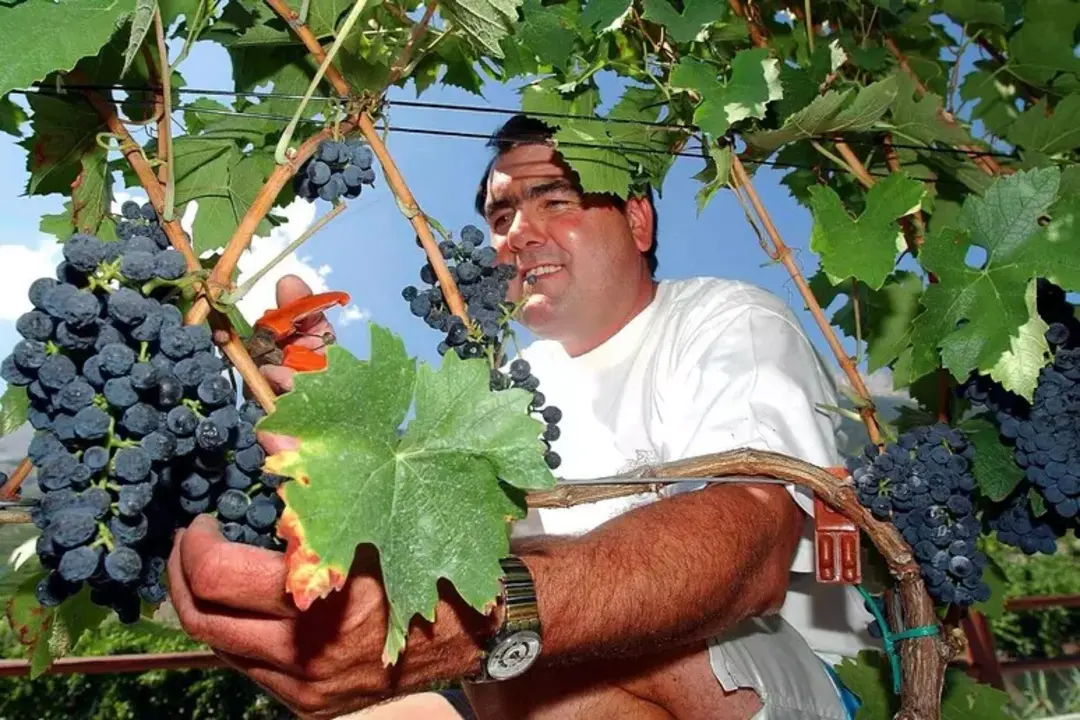
Melgaço, Portugal, Aug. 26, 2026 (Lusa) - Picking grapes in the rain «is challenging», yet «the harvest goes ahead even in the rain», and workers still enjoy «the break» – a snack, wine, and socialising – across the 700 small plots of Alvarinho grapes grown for Soalheiro in Melgaço.
The harvest taking place in the centre of the village, in the «four to five thousand-metre» garden of Manuel Alves, a 78-year-old retired teacher and one of the 200 winegrowers producing grapes for Soalheiro wine, amongst pumpkins and sunflowers, smells of mint: «The vineyard keeps the land clear and productive; we maintain it with care. This way, I've got wine at home and at least a little bit of mine will be out there», in the bottles of the brand that exports 40% of its production to 55 countries and has an annual turnover of €7.5 million.
His wife, Elsa Alves, also a former teacher, only emerges from the kitchen at around 11:00 a.m., after three hours of making cheeses, rissoles, samosas, sweet and savoury pastries, pork sandwiches and chicken steaks – «all homemade» – to serve those who've been working, accompanied by wine from the previous year's harvest, «too much» for the Belgian couple who paid to enjoy the experience and are surprised by the abundance.
«As we're talking about a smallholding, the grape harvest is very much a family and friends affair. So, it's a way of showing our gratitude over a meal. The break always features local produce – a good ham, codfish cakes, everything we're used to eating. The grape harvest is hard work, but it's also a celebration,» explains Maria João Cerdeira, co-owner of Quinta de Soalheiro, situated in the district of Viana do Castelo, after handing out generous slices of bread with ham.
A kilo of Alvarinho grapes «can fetch as much as €1.30», so it is «profitable to grow vines in a garden», or in the «patchwork quilt» formed by the 700 plots of varying sizes and locations belonging to Soalheiro's producers, totalling 100 hectares.
More than 50 years after Maria João's father planted the first continuous Alvarinho vineyard, the brand produces «10,000 kilos of grapes» per hectare and provides «technical support» while sharing some machinery with the winegrowers.
«It's so that we can all work towards the same goal. That way, we can encourage people to stay here, and make it profitable to do so. We manage to preserve our customs and traditions, and ensure the next generation takes pride in viticulture,» she maintains.
Heavy rain falls on this late autumn morning in August during the «earliest harvest ever» – which began on 11 August – because «we pick the grapes when they are ready» and «ripeness checks begin in July», notes the co-owner, alongside her mother.
«Harvesting in the heat is challenging. Harvesting in the rain is even more demanding. Yet the harvest goes ahead even in the rain,» she says.
The challenge is that the water runs down her raised arms as she cuts the bunches and slides down her torso to her legs, explains Maria João, gesturing in the rain, with a raincoat hastily pulled over her T-shirt as she stands in another vineyard plot, this one far from the centre, part of a total of eight hectares – «something rare» in the region.
Patrícia Ferreira, aged 38, is protected by a yellow rubber suit with a hood. Work begins at 7:00 a.m. and continues «until three in the afternoon», whether or not it's raining.
«What can I do? I've got two children to raise,» she explains.
She's been harvesting grapes since she was 12 or 13. «I needed the money. My grandmother raised me, and I wanted to contribute to my own expenses, so I chose to work,» she adds.
It's not difficult, she explains: «You hold a pair of small secateurs in one hand and the bunch of grapes in the other. You just cut them off and pop them into the giga [a basket for picking and carrying the grapes]. Then the tractor comes to collect them, and they go in Nuno's lorry to the winery.» She says it isn't hard work, but rather «a sport» that «does you good».
Alice Afonso, aged 60, turns up her nose, thinking it «is a bit hard» and says that «your arms and neck ache a bit from looking up».
But she loves it: «When you're feeling a bit down, this really helps relieve the stress. We walk around here, the air is fresh. And during the grape harvest, it's all about the camaraderie – we meet people, make friends. It's really lovely,» she sums up.
ACG/ADB // ADB.
Lusa