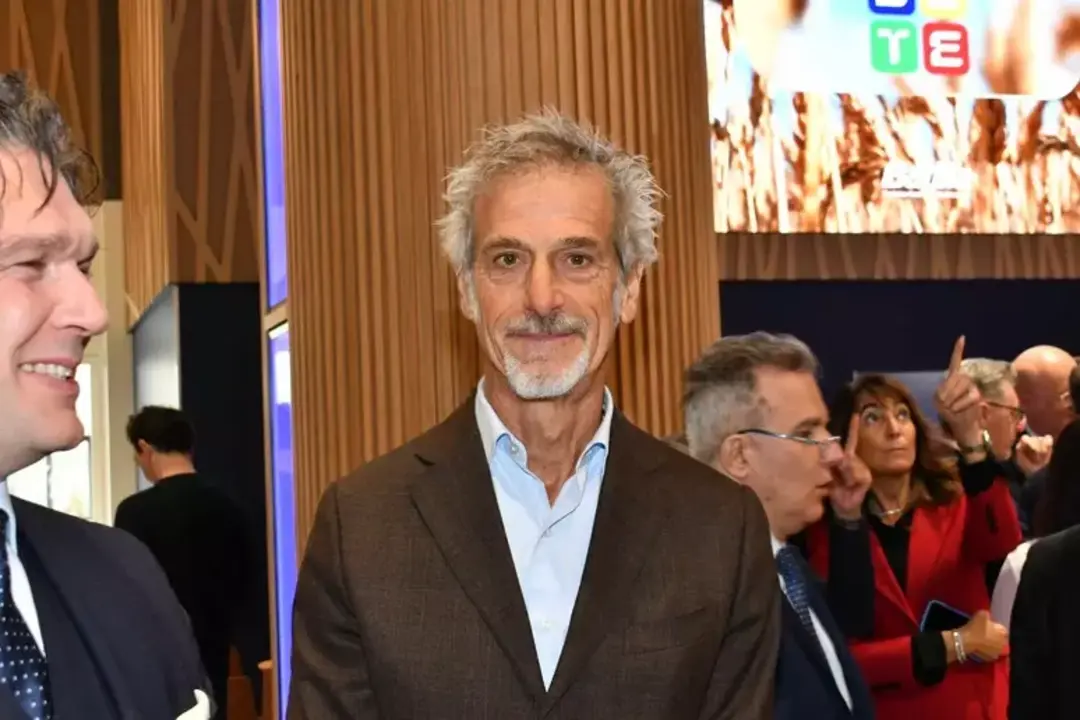
Lisbon, Sept. 3, 2026 (Lusa) - One year after the derailment of the Gloria funicular in the Portuguese capital, trade union leader Manuel Leal, of STRUP/Fectrans, has called for the rebuilding of the municipal transport operator's in-house workshop sector to carry out fleet maintenance, describing the continued insistence on outsourcing as «extremely worrying».
«We clearly believe that the past shows us that serious mistakes were made here – mistakes which, as far as we are concerned, we have no hesitation in stating may be among the indirect causes of these tragic events», says the trade unionist, referring to the decision to outsource maintenance services for the Carris fleet, the company responsible for the Glória funicular and whose sole shareholder is Lisbon city council (CML).
Interviewed on the «Lusa Extra» podcast, launched on Thursday to mark the first anniversary of the Glória accident, the union leader of the Portuguese Road and Urban Transport Workers' Union (STRUP) and Fectrans – Federation of Transport and Communications Workers' Unions, criticised the mayor of Lisbon, Carlos Moedas (PSD), for insisting on outsourcing maintenance of the Carris fleet: «It is an extremely worrying sign.» The historic funicular derailed on 3 September 2025, killing 16 people and injuring 24, of 15 different nationalities. A year on, investigations by the public prosecutor's office and the Office for the Prevention and Investigation of Aircraft and Railway Accidents (GPIAAF) are still ongoing.
On the day of the accident, Manuel Leal told the Lusa news agency that Carris workers had made «repeated complaints» regarding the need for maintenance of the city funiculars, including the one at Glória – a point he reiterates a year later, reinforcing criticism of maintenance outsourcing.
When asked whether the Mayor of Lisbon has properly assumed his political responsibility, the trade unionist replied that, had Moedas «shown signs that he was willing to learn and correct his mistakes, the answer might have been yes», but as «he continues to argue that the future for maintenance will remain outsourcing, the answer is clearly no».
«When a manager cannot find time in his diary to listen to workers' concerns, it does indeed seem to me that there is political responsibility,» explains Leal, pointing out that the unions requested, «in mid-2025», before the derailment, a meeting with Carlos Moedas, but to no avail.
Leal recalls that for «many, many decades» Lisbon's historic transport systems, such as the Glória funicular, relied on «dedicated teams comprising solely Carris staff», who were on duty throughout the vehicles' operating hours, during which «knowledge was passed down from generation to generation».
«During the dismantling of the workshop sector, carried out over the years 2006 and 2007 […] more than 300 workers had their employment contracts forcibly terminated,» he states, emphasising that this led to a breakdown in knowledge regarding fleet maintenance, particularly of historic vehicles.
For Leal, the tragic accident represents «an opportunity» to rebuild Carris's in-house maintenance sector, with teams dedicated to fleet maintenance, in order to put an end to outsourcing. He justifies this need by referring to the rules of public procurement themselves, which stipulate tenders every four years – a process that «does not allow for the consolidation of knowledge or the consolidation of teams».
According to Manuel Leal, unlike the Mayor of Lisbon, the current chairman of Carris, Rui Lopo – appointed following the resignation of Pedro de Brito Boga in the wake of the accident – «shares the concerns regarding the need to put an end to outsourcing».
On whether the tragedy could have been avoided, the trade unionist shares the account of a former Carris maintenance worker who highlights the importance of practical knowledge: «Look, often, when we started our shift, just from the noise the vehicles were making, we knew there were problems. We'd stop, go and check, and sure enough, the problem was there.» For the trade unionist, the presence of Carris staff dedicated to maintenance «meant that, for many decades, there were no serious problems whatsoever» with the operation of the historic rolling stock.
«Obviously, zero risk will never exist,» he says, adding that maintenance services integrated internally within Carris can «contribute to an effective reduction in risk».
Regarding the solution for the future Glória funicular, Leal points out that what he knows comes from the media and argues that «2029 is a distant target, meaning the city will still be without this means of transport for another four years», but agrees that the new vehicles must be «completely different, equipped with all the latest technology and modern features» to prevent accidents.
As for the Bica and Lavra funiculars and the Santa Justa funicular, which have been out of service since the derailment whilst undergoing inspection, Leal adds that these too must be «vehicles with completely different technological capabilities, modern ones, capable of addressing safety concerns, not only for passengers but also for Carris staff».
Leal also emphasises the need to value Carris staff, including through pay, in order to retain skilled personnel in the workshop areas, particularly «mechatronics engineers who, after several years of training, end up leaving the company».
SSM/AYLS // AYLS
Lusa