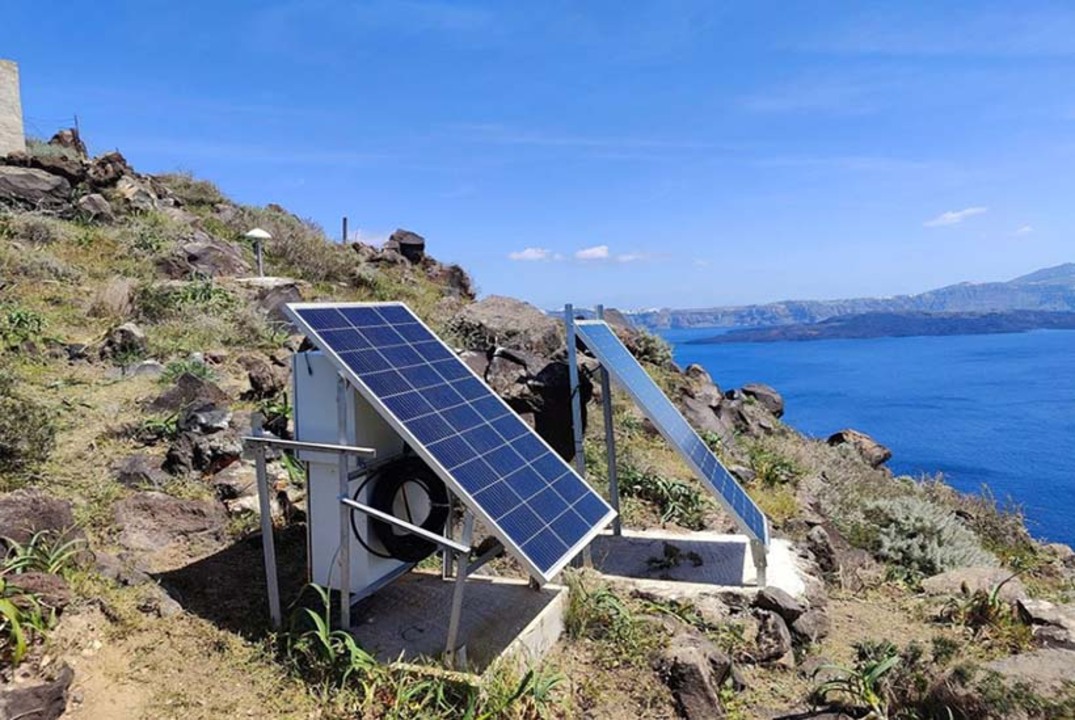
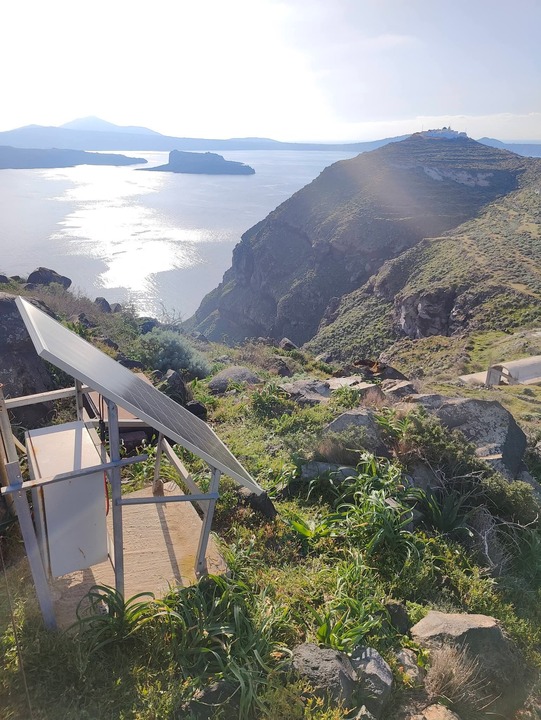
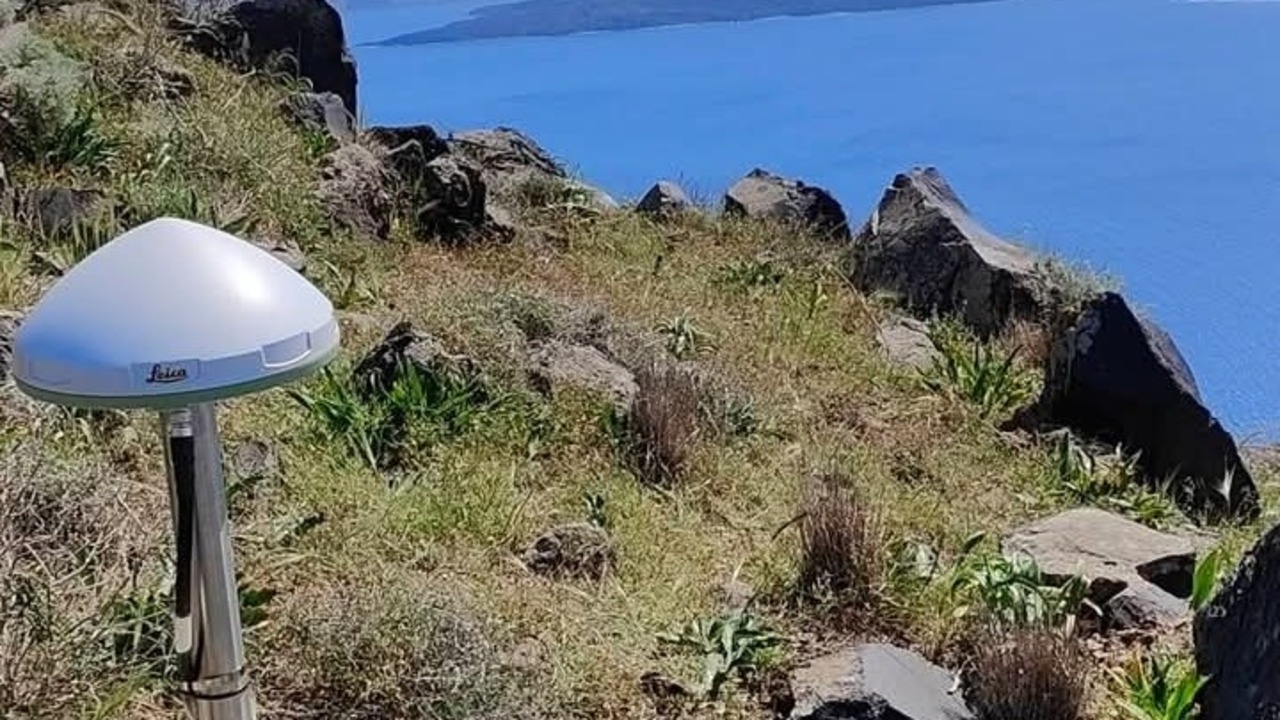
Santorini, Therasia and the islets of Nea and Palea Kameni have recently been "wired up" as part of an upgrade to the network of geodetic stations that monitor seismic activity and detect ground movements signaling new phases of seismic unrest. Cables, solar panels and surveying instruments resembling telescopes-used to measure angles and distances-now encircle the caldera, blending into the volcanic landscape while recording any changes that could indicate an emerging phenomenon.
The work of the geodetic stations is complemented by seismographs, which can confirm whether these deformations are triggering activity along specific fault lines. At the same time, advanced systems using artificial intelligence and machine learning algorithms analyze seismic recordings to detect potential precursor quakes, in combination with satellite monitoring by the European Space Agency and data from stations conducting geochemical measurements, including gas emissions and changes in seawater temperature.
Speaking to the Athens-Macedonian News Agency (ANA-MPA), Professor of Seismology at the Aristotle University of Thessaloniki, Kostas Papazachos, noted that both seismo-volcanic centers in Santorini and Anydros-which showed heightened activity in 2024 and 2025-are now in significant decline, returning to pre-crisis levels. However, he stressed that the area continues to be closely monitored by scientists in order to collect dense, high-quality and multi-source data, enabling authorities and the public to receive timely and reliable assessments.
"In collaboration with the Aristotle University of Thessaloniki, we have completed the installation and upgrade of a network including three new GNSS geodetic stations for satellite monitoring of ground deformation. The total number of geodetic stations now stands at ten. We have also upgraded the existing seismological stations, decommissioning the old analogue network that had been operating in Santorini for 31 years. In addition, a new digital seismological station is currently being installed in the Akrotiri area, while the old network has been dismantled. Upgrades have also been carried out in the power supply, monitoring and operation of all remaining networks. Finally, plans are underway to move to Anydros and, in particular, to the Christiana islets for the permanent installation of a new seismograph. Temporary systems had been deployed there during the recent crisis, and the goal now is to install modern, permanent equipment capable of monitoring seismic activity in the long term."