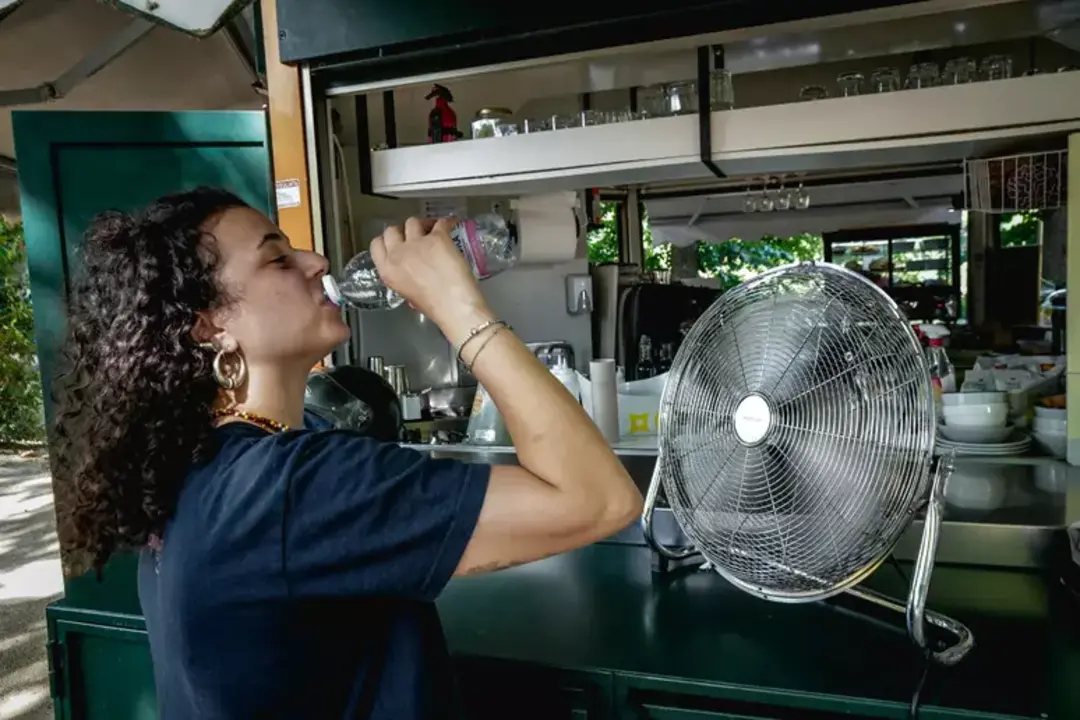
Italian electricity demand hit an all-time high in July amid surging demand for cooling facilities and equipment amid the country's brutal heatwaves, grid operator Terna said Thursday.
The highest monthly figure ever of 32.5 TWh was an 8.3% increase compared to the same month in 2025, Terna said.
It said that the result was linked to exceptionally high temperatures, which also contributed to the annual peak in demand, amounting to approximately 58 GW on July 15th (+4.5% compared to the peak in 2025).
The positive trend in industrial consumption is also confirmed: according to Terna's calculations of the IMCEI index, which examines the industrial consumption of approximately 1,000 energy-intensive companies, the figure increased by 2.1% in July compared to the same period last year.
For the period January-July 2026, the index showed a 4% increase compared to the same period in 2025.
Furthermore, photovoltaic production continued to grow (6.7 TWh, +20.6% compared to July 2025), primarily driven by the increase in installed capacity: +3,791 MW from January to July 2026, +6,874 MW compared to July 2025.
Overall, renewable sources covered 41.5% of demand.
From January to July, demand increased by 3.4% compared to the same period in 2025.
The positive variation in July, explains the company that manages the national transmission network led by Pasqualino Monti, fully recovers the decline observed in the same month last year (-3.1%) and was achieved with the same number of working days (23) and with an average monthly temperature 1.2°C higher than that of July 2025 and almost 2°C higher than the ten-year monthly average.
In particular, in the last five days of the month, temperatures exceeded the seasonal average by up to around 6°C, contributing to the growth in demand.
Corrected for temperature and calendar effects, the figure marks an increase of 5.1%.
In cyclical terms, the electricity demand, adjusted for seasonal and calendar effects and temperature, records an increase of 1.6%.
The data confirms the third consecutive month of growth and brings the trend, for the first time, back to pre-2022 energy crisis levels.
Regionally, the trend is positive across the country: +8.3% in the North, South, and Islands, and +7.9% in Central Italy.
In July, domestic production met 84.4% of electricity demand, while the remaining 15.6% was met by the balance of energy traded with foreign countries.
Net domestic production stood at 27.7 TWh (+7.9%). The foreign balance also increased (+10.2%), due to increased imports (+4.4%) and reduced exports (-49.3%).
Thermal energy increased (+14.1%) due to the stability of renewable sources (+0.8%) and to cover the significant increase in demand.
Overall, generation from renewable sources covered 41.5% of national electricity demand (compared to 44.5% last year).
Wind power decreased (-20.3%), followed by hydropower (-14.9%), geothermal power (-3.6%), and biomass (-2%), while photovoltaic production increased (+20.6%).
Compared to July 2025, photovoltaic production increased by 1,144 GWh, primarily due to increased installed capacity (+946 GWh) and, to a lesser extent, to the generation effect (+198 GWh).
According to Terna's findings, in July, installed renewable capacity increased by 745 MW, with a contribution from high-voltage plants of 405 MW, including solar and wind.
As of July 31, 87.70 GW of installed capacity was recorded, of which 47.30 GW was solar and 14.0 GW was wind.
Regarding storage, 948,154 plants were registered in Italy, corresponding to 19.43 GWh of capacity and 8.0 GW of nominal power.
ALL RIGHTS RESERVED © Copyright ANSA