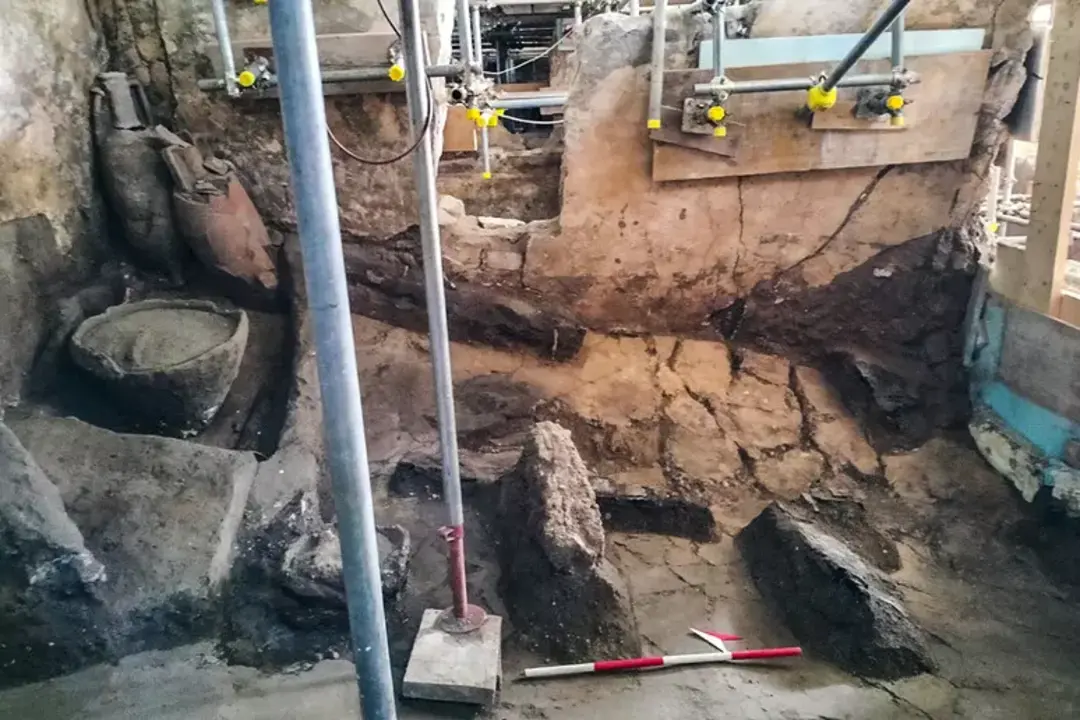
Fresh discoveries have been made in the Villa of the Slaves at Pompeii, the Civita Giuliana complex where enslaved workers, whom the Romans called "talking instruments," lived, the Italian culture ministry said Friday.
Recent excavations have uncovered amphorae containing broad beans and a large basket containing fruit in a room on the first floor.
This food was a precious commodity for the men, women, and children who lived in 16-square-meter cells with up to three beds.
But the discovery, explains the Ministry of Culture, also demonstrates that in some cases slaves ate better than their 'free' neighbors: since they were considered "tools of production," their masters evidently made sure to supplement their diets with foods rich in vitamins, such as fruit, or proteins, such as beans, to maintain their value, which could reach several thousand sesterces.
The excavations were carried out with a €140,000 grant as part of the "National Excavation Campaign in Pompeii and Other National Parks," funded by the 2024 budget law.
"It's cases like this where the absurdity of the ancient slave system becomes apparent," comments Pompeii Director Gabriel Zuchtriegel, co-author of the study on the Civita Giuliana slave quarter.
"Humans are treated like tools, like machines, but humanity cannot be erased so easily.
And so, the boundary between slave and free was constantly in danger of disappearing: we breathe the same air, we eat the same food, sometimes slaves even eat better than the so-called free."
ALL RIGHTS RESERVED © Copyright ANSA