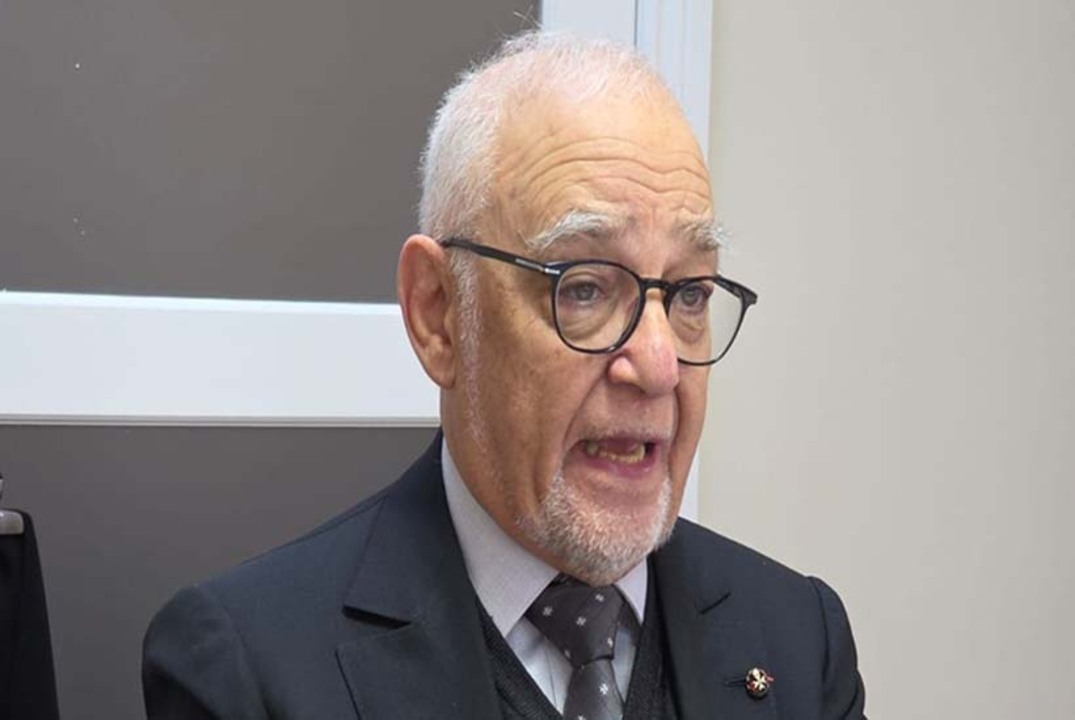
Beijing, Sept. 9, 2025 (Lusa) - Trade tensions between Europe, the United States and China open a window of opportunity for Portugal to attract Chinese industrial investment, Bernardo Mendia, president of the Portuguese-Chinese Chamber of Commerce and Industry, said on Tuesday in Beijing.
Speaking to the Lusa news agency on the sidelines of Portuguese Prime Minister Luís Montenegro’s visit to the Asian country, Mendia highlighted several areas in which Chinese companies are competitive and which coincide with European priorities, such as energy transition.
“Renewable energy, electric vehicles, batteries, energy storage, 5G-related technologies and artificial intelligence are areas in which Portugal should lend a hand and take advantage of the fact that we have Macau as a bridge,” he stressed.
The European Commission has imposed tariffs of up to 35% on Chinese electric car manufacturers to prevent unfair competition in the face of subsidies granted by the Chinese state. This has created an incentive to relocate production to Europe. Chinese manufacturer BYD plans to open a new factory in southern Hungary, in an investment valued at €4 billion. China has also accumulated more than €10 billion in investments in Spain in the areas of electric vehicles and green energy.
CALB (China Aviation Lithium Battery), one of China’s largest battery manufacturers, confirmed last February a €2 billion investment in Portugal to build a lithium-ion battery factory in Sines, as part of its European expansion strategy.
Referring to CALB’s investment, Mendia considered that this is the type of project that “should be multiplied”.
“During this visit, we must remember the advantages Portugal has to offer for this type of investment. Not only does it attract capital, but it also generates skilled jobs, new tax revenues and future exports,” he said.
He pointed out that Portugal had attracted a lot of Chinese investment in previous years, but that competition had increased, particularly from Spain and Hungary, and that “more is needed”.
The trade war between Beijing and Washington threatens to penalise Chinese production of almost all products exported to the United States, encouraging Chinese manufacturers to relocate production to circumvent tariffs, currently set at 30%, as a result of a temporary truce between both sides.
“It’s a way to get around these barriers, but also to generate goodwill and lasting relationships, just as Europe did when it relocated production to China 20 or 30 years ago,” he said.
Mendia warned, however, that it is necessary to be aware of the different scales between the two countries.
“Portugal does not have the same industrial capacity. For every 140 Chinese companies investing in Portugal, we would bring in one, to be proportional,” he illustrated.
During its stay in China, the Portuguese-Chinese Chamber of Commerce and Industry will participate in several fairs and forums, such as the China International Fair for Trade in Services (CIFTS) and the Belt and Road Initiative summit in Hong Kong.
“We want to show that Portugal is open to collaboration and convey concrete opportunities. Sometimes this results in contacts with companies, other times with local Chinese governments that are also looking for foreign investment for their local authorities,” he said.
“What the Chinese are looking for is viability. And our mission is to present Portugal as a stable and open alternative at a time when trade tensions and protectionism are on the rise,” he concluded.
Bernardo Mendia considered that Luis Montenegro’s visit “is always very positive,” stressing that “there has not been a visit of this level since 2016.”
“The presence of the prime minister carries a lot of weight, especially on the Chinese side. Portugal has a tradition of good relations with various cultures, and this trip, which also includes Macau and Japan, reflects that,” he said.
Although there is no economic forum on the agenda for the visit so far, Mendia pointed out that the minister of the economy and territorial cohesion, Manuel Castro Almeida, is included in the delegation, which, he said, “also signals something”.
“I believe the visit has substance. It may not be public, but I am confident that it has been well prepared by AICEP (Portuguese Agency for Investment and Foreign Trade) and the Government,” he added.
JPI/AYLS // AYLS
Lusa