TIRANA, Oct 6 /ATA/ Minister of Infrastructure and Energy Enea Karakaçi said today that the Tirana–Durrës–Rinas Airport railway project is part of a broader vision to revitalise and modernise the railway sector and make Albania’s rail network a functional component of the national transport system.
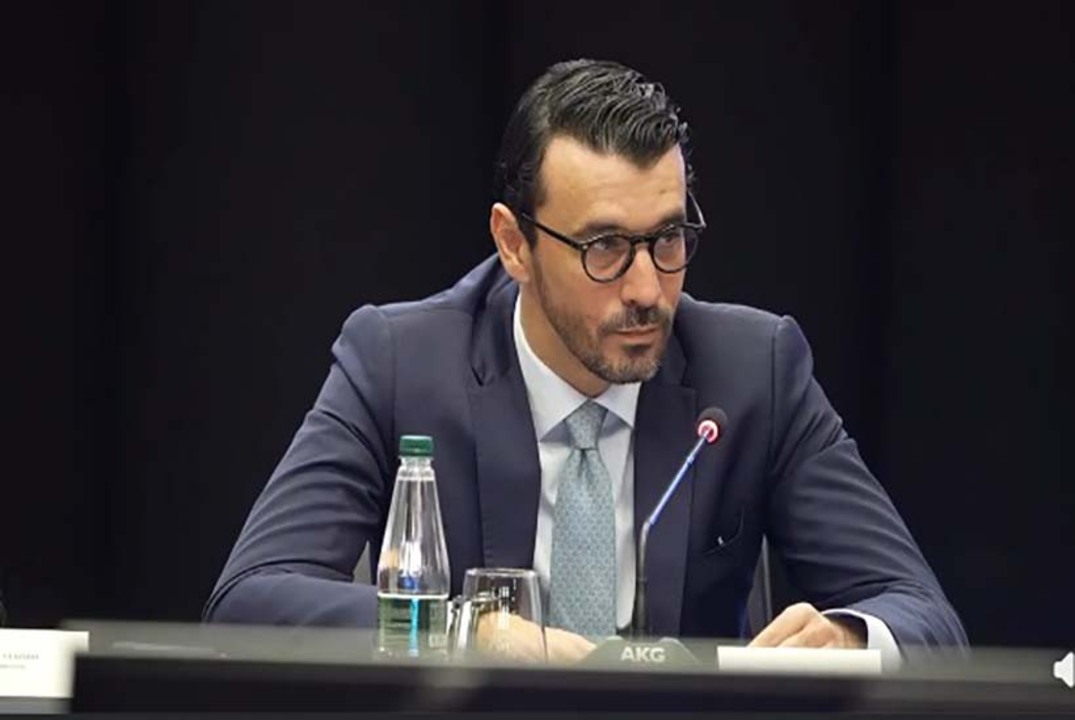
Speaking at a consultation meeting with representatives of major international companies on the Public Service Contract for passenger rail transport on the Tirana–Durrës–Rinas Airport line, Minister Karakaçi said that “the project includes the rehabilitation of the existing line, a new connection to the airport, the construction of stations and their electrification.”
“The rehabilitation works and construction of the stations are now nearing completion, while the final component of the project, electrification, is expected to be completed by the end of 2027,” he said.
Karakaçi added that “the railway sector has often faced significant shortcomings, most of them inherited, but also stemming from challenges related mainly to financing a sector that requires substantial funding worldwide.”
“Nevertheless, the railway sector has undergone a major transformation in recent years. Albania is implementing an ambitious investment programme to restore and modernise its railway network and gradually integrate it with regional and European networks,” Karakaçi said.
Referring to the Public Service Contract for the first Tirana–Airport–Durrës corridor, Karakaçi said it would establish the contractual framework for passenger rail services, setting out the public service obligation, service standards, the operator’s responsibilities and the compensation mechanism.
“This marks an important shift in how we approach rail transport. The state now defines the need for and standard of the public service, while a competitive procedure allows the market to identify the most suitable solution for operating the service.
The contract must clearly set out the key elements of the service, including the volume of services and train-kilometres, timetables, rolling stock, the ownership or leasing model and financing, maintenance, use of the depot in Shkozet, the mobilisation period, the contract duration, the compensation and indexation mechanisms, the treatment of ticket revenue, and the KPI performance framework,” Minister Karakaçi said.
He said performance would also be a key consideration.
“We do not simply want an operator to run train-kilometres. We want a service that is measurable and accountable to citizens—punctual, safe, reliable, well maintained and delivered to clearly defined quality standards. The procedure we are preparing must also ensure competition, transparency and the flexibility needed to secure the best solutions from the market. This represents a new partnership with the private sector,” he said.
Karakaçi added that the process should also bring the expertise and experience of international and private operators into Albania’s railway system.
“The market consultation is intended not only to gauge interest in operating the service, but also to identify viable market solutions for rolling stock, financing, maintenance and mobilisation.
Our aim is for the operator’s expertise to help build domestic capacity and transfer knowledge to Albanian Railways staff, particularly in maintenance,” he said.
Minister Karakaçi said Albania had entered a new phase in the development of its railway sector, with investments in infrastructure, the rehabilitation of existing lines, electrification and modern signalling systems, as well as new rail links to airports and ports and the restoration of international connections.
“Above all, we are working to turn these investments into concrete services for citizens,” he said.
Karakaçi said the Public Service Contract for the Tirana–Durrës–Airport line was a key step in turning the new infrastructure into the modern rail service expected by citizens. He stressed that cooperation between Albanian institutions, European and financial partners—including the EBRD, EIB and EU consultants—and the private sector would be crucial to achieving this goal.
/k.s/r.e/a.f/sm/