Aljustrel, Portugal, June 16, 2026 (Lusa) - An investment of over €400 million in the industrial and energy sustainability sectors was launched at the Aljustrel mine in the district of Beja on Tuesday, positioning the concessionaire at the “forefront of modern mining”.
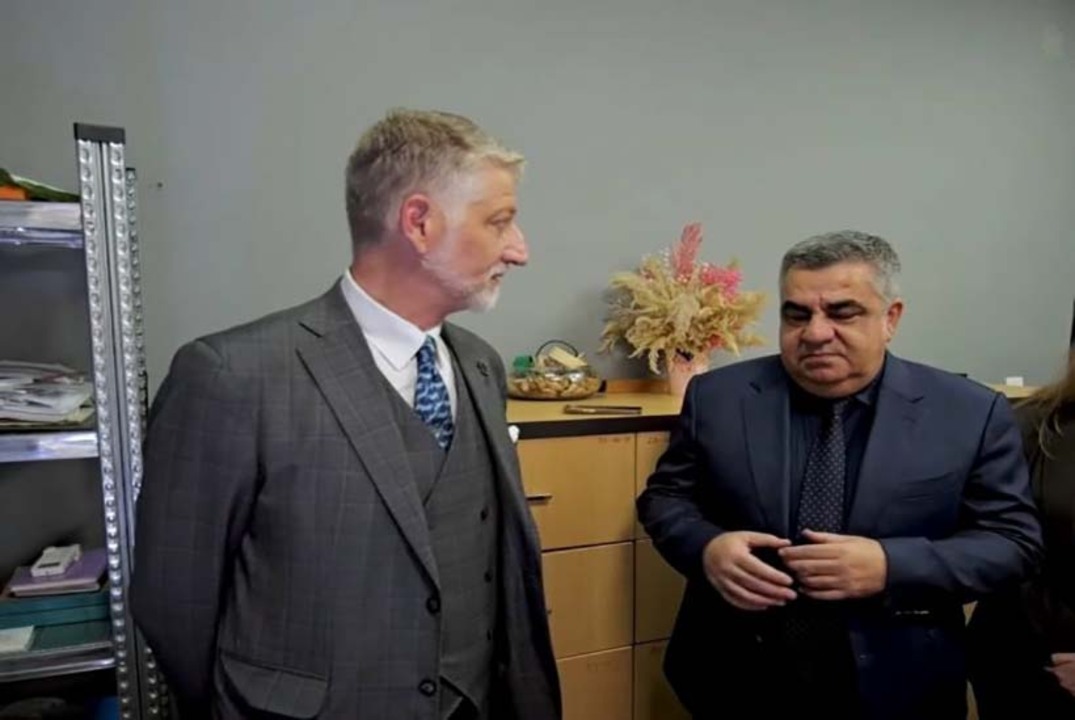
The “Feeding the Global Energy Transition” project, promoted by ALMINA – Minas de Portugal, was inaugurated by Prime Minister Luís Montenegro, who described the investment as vital for strengthening Portugal’s “autonomy”, “independence” and “sovereignty” in this area.
“We are here laying the foundations for our future, building a modern, productive, sovereign Portugal,” the PM said accompanied at the ceremony by the minister for the economy, Manuel Castro Almeida, and the minister for the environment and energy, Maria da Graça Carvalho.
Montenegro, who began by descending into the mine before presiding over the opening ceremony, also emphasised that his government was pressing ahead with a strategy “for geological resources, the cornerstone of which is administrative simplification”, with greater “coordination among stakeholders”.
Developed over the last five years, ALMINA’s “Feeding the Global Energy Transition” project, funded to the tune of around €128 million by the Recovery and Resilience Plan (RRP), has enabled the expansion of the mine’s industrial processing plant, which can now process six million tonnes of copper and zinc each year.
The project also included, amongst other investments, the construction of a solar photovoltaic power generation unit for self-consumption, with an energy production capacity exceeding 40,000 megawatt-hours (MWh) per year.
“Today is a historic milestone for our company and for the mining industry in Portugal,” acknowledged Humberto Costa Leite, chair of ALMINA’s board of directors.
According to Costa Leite, “there can be no energy transition without a digital revolution and without mining”, particularly copper and zinc, the metals produced at the Aljustrel mine.
“Mining is the ‘kilometre zero’ of modern life, and that ‘kilometre zero’ has a historic location: Aljustrel,” he emphasised.
According to Costa Leite, the project inaugurated today “was conceived almost five years ago”, in response to the company’s need to “keep costs down” given the impossibility of controlling “metal prices” or “daily fluctuations in the euro-dollar exchange rate”.
“This project allows us to process ores, copper and zinc simultaneously by linking the two production lines and optimising metal recovery to create greater value,” he said.
The chair of ALMINA added that the concessionaire is awaiting the issuance of the environmental impact statement in order to “invest €150 million over four years” in the development and construction of the Gavião deposit, which is predominantly copper-bearing.
In addition, the mining company intends to proceed with trial mining at the Albernoa deposit, which contains zinc and copper, where “€10.8 million invested in exploration” has led to “a discovery with a high probability of economic value”.
“We have applied for experimental mining rights and are awaiting the signing of the contract, but we have lost more than a year of precious time due to the legislative ‘maze’,” he lamented.
In this context, the president of ALMINA said he hoped that the state, despite its “duty to regulate”, would act as “a facilitator rather than an obstacle to wealth creation”.
“We need to launch on-site prospecting urgently and efficiently, because that is where it all begins. Without assessing the economic value and the time involved, there will be no mines in Portugal,” he added.
Speaking to government officials, Humberto Costa Leite explained that ALMINA “has a monthly energy bill of over €2 million” and called on the government to take “bold, long-term decisions” in this area.
CYMP/ADB // ADB.
Lusa