Macau, China, June 9, 2026 (Lusa) - Timor-Leste’s Minister for Petroleum and Mineral Resources, Francisco Monteiro, acknowledged in comments to Lusa that the country’s heavy reliance on oil imports has exacerbated the impact of rising prices driven by the crisis in the Middle East.
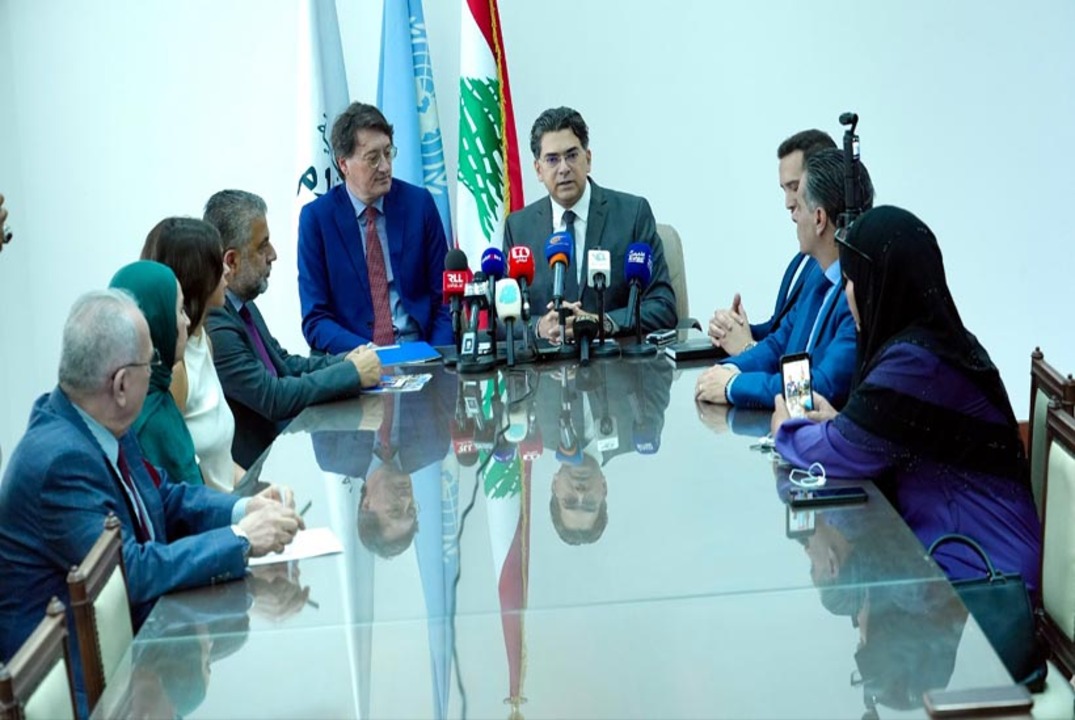
While in Macau for the International Investment and Infrastructure Construction Forum (IIICF), Monteiro told Lusa that the rise in international crude oil prices had had an immediate effect on the Timorese economy.
“We do not yet have our own refineries, so everything is being imported from Singapore and other Asian countries. The crisis in the Middle East has been keenly felt in the country,” he said.
To mitigate the impact, the Timorese government has introduced subsidies and stabilisation measures, ensuring that these have “calmed the market somewhat”.
A report published by the World Bank in April warned that Timor-Leste should develop the private sector, create jobs, increase domestic revenue and curb the budget deficit so that oil revenues no longer sustain economic growth.
Monteiro stressed that economic diversification is “a priority”, with investments in tourism and agriculture, as well as the introduction of VAT and strengthening of the private sector.
“The government is not standing still on this; it is also working hard to develop other sectors, with the aim of reducing the country’s dependence,” he told Lusa.
Monteiro stressed that the focus on industrialising the oil and mineral sectors is seen as essential to creating multiplier effects in the economy.
“In the past, we only received money from exports. Now we want to add value to the industry’s supply chains and create economic activities within the country,” he said.
The Timorese government recently acknowledged that the country’s Petroleum Fund could run out by 2034.
With the closure of the Bayu-Udan field, revenues fell to just US$36 million (€30.6 million) in 2025, whilst the Petroleum Fund’s balance stood at US$18.6 billion (€15.81 billion).
The minister told Lusa that “efforts are being made to ensure the sustainability” of the fund, with plans for new onshore and offshore exploration.
“This year we will only be carrying out offshore drilling in Timor-Leste, which could start producing as early as late 2027 or early 2028,” he said.
Last year, the government approved an investment of US$16 million (€13.6 million) to develop the Greater Sunrise gas field and ensure that the gas pipeline comes to the country.
Located 150 kilometres from Timor-Leste and 450 kilometres from Darwin, the field has been the subject of intense negotiations with Australia and the operator Woodside Energy.
The consortium comprises Timorese company Timor Gap (56.56%), Woodside (33.44%) and Osaka Gas (10%).
The current expectation is that natural gas extraction will begin between 2028 and 2032, and the field is estimated to contain 5.1 trillion cubic feet of natural gas and 226 million barrels of oil.
Initial expectations predicted that the estimated total revenue from the gas field would be between US$50 billion (€42.5 billion) and US$70 billion (€59.5 billion) over its lifetime, but Monteiro indicated that, based on current prices, this estimate could “generate more than US$100 billion (€85 billion)”.
The minister highlighted that state-owned companies such as Sinopec, CNPC and PetroChina may be included in the project’s development, but only once legal and contractual frameworks have been established.
The permanent maritime boundary agreement between Timor-Leste and Australia stipulates that Greater Sunrise, a shared resource, will have to be divided, with 70% of the revenue going to Timor-Leste in the event of a pipeline to the country, or 80% if processing takes place in Darwin.
Monteiro explained that Timor-Leste is finalising legal and contractual frameworks with Australia, following the Treaty on the Timor Sea, before opening the door to the participation of Chinese companies.
NCM/AYLS // AYLS
Lusa