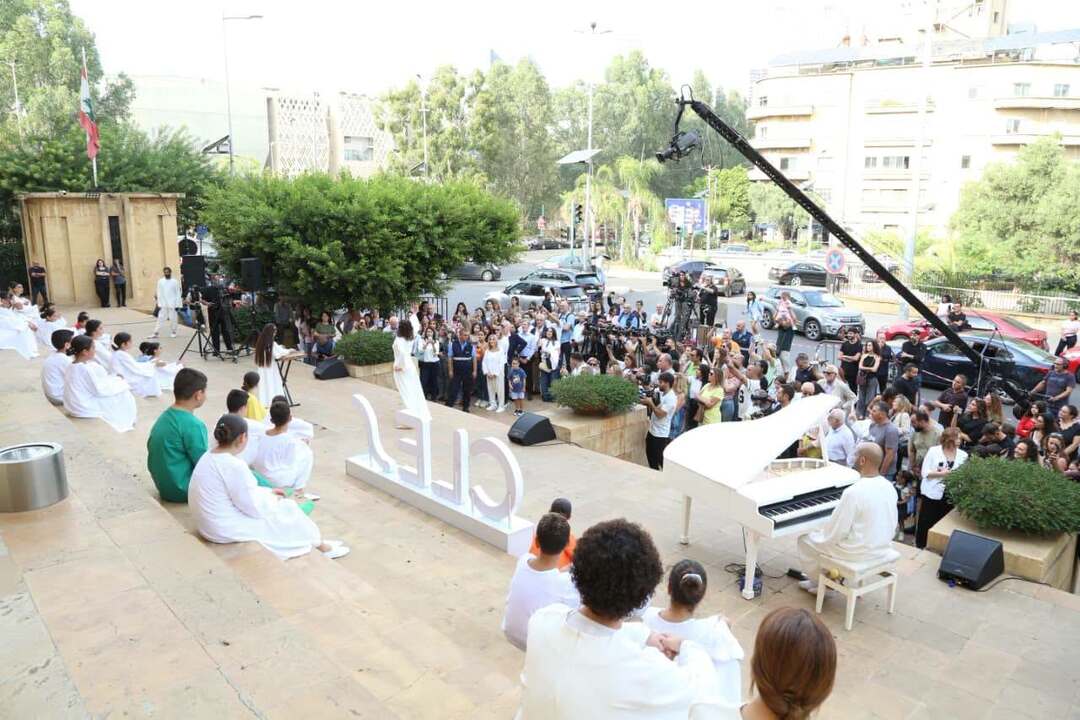
Beja, Portugal, March 12, 2026 (Lusa) - The European City of Wine 2026, awarded to Portugal's Baixo Alentejo region, officially kicks off with a gala in Beja on Friday, giving a boost to the 537 winegrowers who cultivate 5,880 hectares of vineyards in the region.
According to the Intermunicipal Community of Baixo Alentejo (CIMBAL), one of the event's promoters, it is estimated that "one in four households" in Baixo Alentejo has "links to activities in the wine sector", namely viticulture or wine production.
There are 537 winegrowers in the region who cultivate 5,880 hectares (ha) of vineyards, representing 27% of all winegrowers in the Alentejo.
Of this total, 167 are members of the Alentejo Wine Sustainability Programme (PSVA), run by the Alentejo Regional Wine Commission (CVRA), covering a production area of over 3,400 ha, 10 of which are wine producers with sustainable production certification.
These are the four pillars - vineyards, wine production, sustainability and people - that led to the award of the title European City of Wine 2026 to the Baixo Alentejo region.
The event officially opens its programme of celebrations on Friday with a gala at the Pax Julia Municipal Theatre in Beja, starting at 8.30 pm.
In a statement, the Beja city council indicated that the celebration will mark "the passing of the baton from the “European City of Wine” from Spain to Portugal," with the handing over of the flag by the Ambassador of the Wine Regions of Portugal 2025.
The show will also include musical performances by Cristina Taquelim and Ana Santos, Cantadores do Desassossego, Grupo Coral de Nossa Senhora das Neves, Fernando Pardal, Jorge Cruz and Mafalda Vasques.
The European City of Wine 2026 is promoted by the Regional Tourism Authority (ERT) of Alentejo and Ribatejo and by CIMBAL, with the support of the 13 local authorities that are part of the organisation, meaning that only one of the local authorities in the region of Beja is left out, namely Odemira, which is part of the Alentejo Litoral Intermunicipal Community.
According to the Beja city council, Friday's gala "celebrates the project resulting from institutions that preserve their history and tradition, that value their heritage and, in this case, one of the most emblematic products of the region, wine, intrinsically linked to local identity".
This was another of the aspects highlighted by the promoting entities to “attract” the European title, as it is "the only region in the country that has a strategy for economic and regional enhancement for the wine and tourism sector", through the ENOTUR - Alentejo and Ribatejo Wine Tourism project.
According to CIMBAL, this is part of the Programme for the Economic Enhancement of Endogenous Resources (PROVERE), within the scope of the Alentejo 2030 Regional Programme, and aims to "bring greater knowledge and innovation [and] networked projects and pioneering wine cellar certification to the Baixo Alentejo".
At the same time, the history behind the production of talha wine ( made from white and red grapes, with or without destemming, in which the grapes are crushed and fermented in clay containers known as talhas) - "one of the fundamental pillars of the application" - and the cultural atmosphere surrounding the "geography and space par excellence of Alentejo chanting" are part of the distinction.
"The opening gala is also an opportunity to publicise the programme planned for the 13 local authorities of CIMBAL, which will run until January 2027," the note reads.
Throughout the year, the European City of Wine 2026 programme includes a "very wide" range of activities, such as themed events, conferences, sales workshops, competitions and pop-up events, among other activities, divided into the themes Wine in the arts, Wine in heritage and Wine on the street.
The programme includes events such as Gravel & Wine, Wine Music Series, Rural Song Festival, Wines in Water, the Wine City and Wine Region Ambassadors competitions, as well as the annual fairs Vin&Cultura (Aljustrel), Ovibeja and ViniPax (Beja), Wine Festival (Mértola), MouraWine (Moura), Vitifrades and Vidigueira Vinho (Vidigueira).
ASYS/AYLS // AYLS
Lusa