The Greek National Opera presents a new, captivating production of Anna Bolena, conducted by Jacques Lacombe and directed by Themelis Glynatsis. The performance will run for six shows at the Stavros Niarchos Hall of the GNO at the SNFCC starting on 26 March 2026.
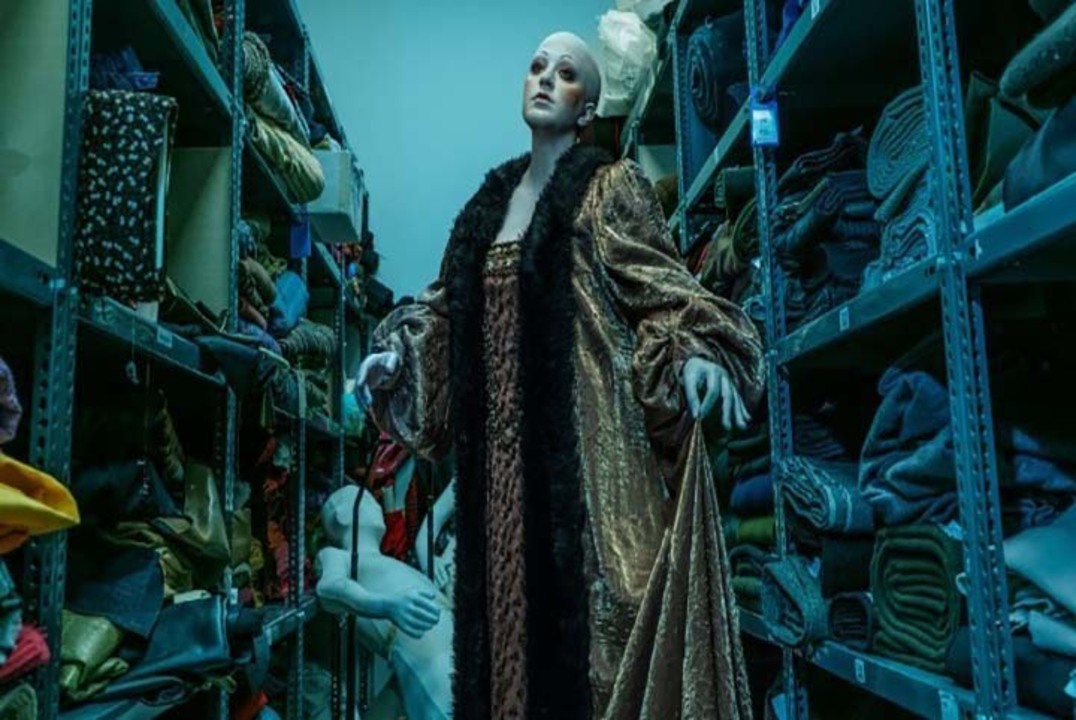
As part of the 2025/26 season’s key theme, ‘The opera of the future arises from the womb of the past’, Gaetano Donizetti’s emblematic masterpiece will feature Nicholas Georgiadis’ historical costumes in a creative dialogue with a new stage world created by Leslie Travers. Making her debut in the title role will be the young soprano Maria Kosovitsa.
Anna Bolena is a unique milestone in the Italian Romantic repertoire, marking the transition of bel canto from mere vocal exhibitionism to a meaningful tool for dramaturgy. The work premiered to immense success on 26 December 1830 at the Carcano Theatre in Milan, signaling Donizetti’s first international success, as, immediately after the premiere, it was performed across the world. It features a dramatic story filled with passion, political intrigue, and betrayal, which, in combination with its inspired musical and poetic language, fascinatingly unveils the characters in the work, especially Anna’s. Felice Romani’s libretto tells the story of the final days of the Queen at the court of Henry VIII. The downfall of Anna is foreshadowed when the King’s romantic focus shifts to Giovanna Seymour. The return of Anna’s old lover, Lord Percy, and young Smeton’s unfortunate intervention give Henry the pretext to accuse her of adultery, which leads to her arrest. At the Tower of London, Anna refuses to confess despite Giovanna’s urging and the sacrifices of Percy and Smeton. Shortly before her execution, she raves, reminiscing about her past. She forgives her enemies and is then led to the gallows, while the King and Seymour’s wedding is being announced.
Anna Bolena not only recounts a historical downfall; it also sheds light on the timeless themes of power, public image, and personal vulnerability, showcasing the voice as a space of inner conflict and memory. Through its music and dramaturgy, this masterful opera provides contemporary audiences with the opportunity to reflect on the relationship between the individual and the system, making each new performance a lively and relevant artistic statement.
Anna Bolena, which is part of the ‘Tudor Trilogy’, was composed by Donizetti in just a month. After its world premiere, it remained popular for approximately fifty years. Following a long period of obscurity, it reentered the repertoire during the 1950s, mostly thanks to Maria Callas’ performance at La Scala in Milan in 1957, which paved the way for the revival of even more ‘forgotten’ bel canto works. Callas’ approach to the role, which combines the vocal artistry of bel canto with a powerful expression of the tragic quality, remains a model performance to this day, while the work’s live recording is regarded as a historic record of the opera and a point of reference for the role.
The stage director of the production, Themelis Glynatsis, after his highly successful staging of Béla Bartók’s Bluebeard’s Castle, approaches Anna Bolena not as a monument to be portrayed but as a material to be deconstructed, raising the question of how and on what terms a 19th-century work can stand today without being turned into a museum-like object.
The Orchestra of the Greek National Opera will be led by the internationally acclaimed conductor Jacques Lacombe, marking his third collaboration with the GNO, after the productions of La bohème and Werther. Lacombe, who has extensive experience with Gaetano Donizetti’s works, has served as the conductor of the Bonn Opera in Germany and as the musical director of the New Jersey Symphony Orchestra and the Mulhouse Symphony Orchestra in France. He has collaborated with many prestigious opera houses, such as the Royal Opera House in London, the New York Metropolitan Opera, Deutsche Oper Berlin, Bavarian State Opera, Teatro Regio di Torino, Opéra national du Rhin, and the opera houses of Marseille, Monaco, Nancy, Nice, Seville, and Saint-Étienne. The GNO Chorus was coached by Agathangelos Georgakatos.
Portraying Enrico VIII will be the distinguished bass Petros Magoulas, who has performed some of the most important roles in the repertoire, such as Méphistophélès (Faust), Sarastro (Die Zauberflöte), Osmin (Die Entführung aus dem Serail), Heinrich der Vogler (Lohengrin), Daland (Der fliegende Holländer), Hunding (Die Walküre), Zaccaria (Nabucco), Fiesco (Simon Boccanegra), Banco (Macbeth), Sparafucile (Rigoletto), Pagano (I Lombardi alla prima crociata), Four Villains (Les Contes d’Hoffmann), Don Basilio (Il barbiere di Siviglia), Alidoro (La Cenerentola), Colline (La bohème), Vodník (Rusalka), Count des Grieux (Manon), among others, at the Greek National Opera, the Royal Opera House in London, the Kiel Opera, Welsh National Opera, Bilbao Opera, Israeli Opera, Athens and Thessaloniki Concert Halls, and the Athens Epidaurus Festival.
Renowned mezzo-soprano Miranda Makrynioti will perform as Giovanna Seymour. Makrynioti has performed such roles as Annina (La traviata), Spirit (in Sofianopulo’s The Legend of the Ancient Mariner), Arikia (in Milhaud’s La Deliverance de Thésée), Second child (Die Zauberflöte), Myrsouda (The Murderess by Giorgos Koumendakis), and Frantic (The Cunning Little Vixen), among others.
Distinguished GNO tenor Yannis Christopoulos will portray Lord Riccardo Percy, bass Yanni Yannissis will sing the role of Lord Rochefort, mezzo-soprano Diamanti Kritsotaki will perform as Smeton, and tenor Manos Kokkonis will take on the role of Hervey.