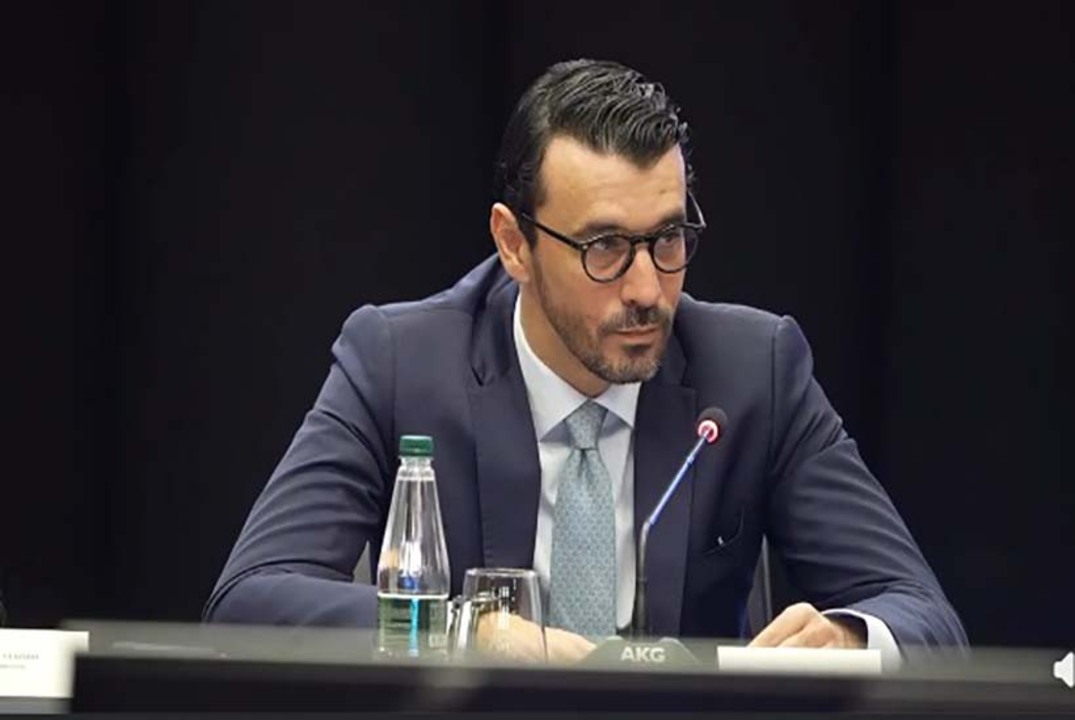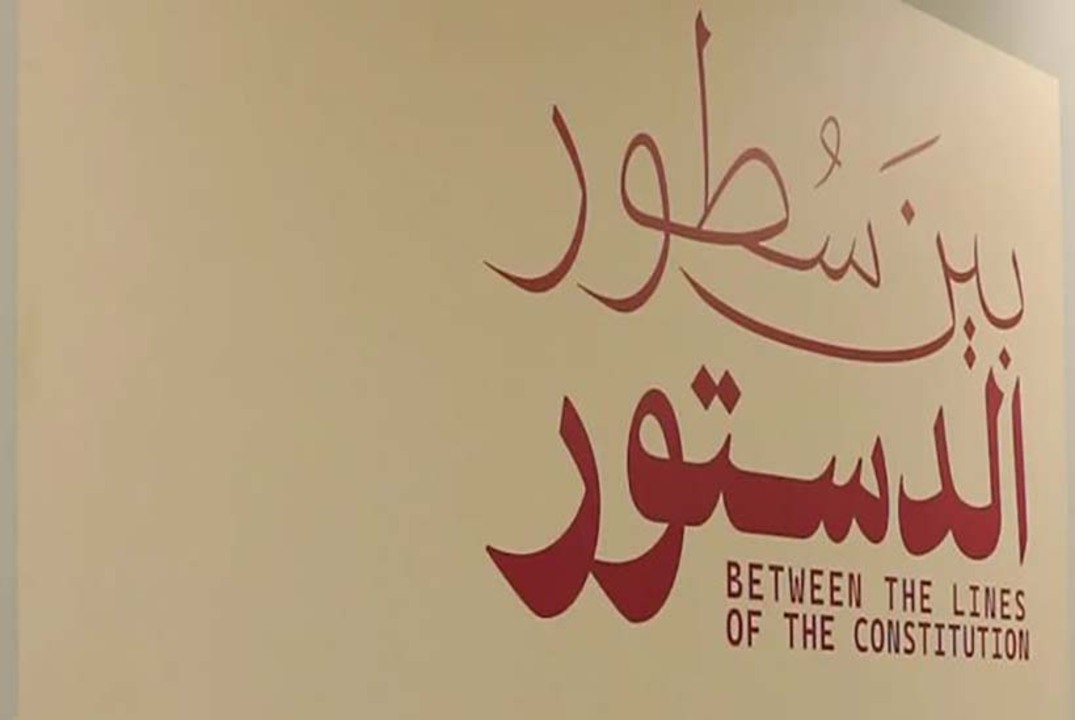
NNA - Minister of Culture Dr. Ghassan Salamé, on Wednesday opened the documentary exhibition "Between the Lines of the Constitution" at the National Library, marking the centenary of the 1926 Constitution, under the patronage of Prime Minister Dr. Nawaf Salam and in the presence of official and diplomatic figures.
Minister Salamé highlighted "five fundamental dilemmas that have shaped Lebanon’s constitutional experience over the course of a century, beginning with the dilemma of balancing individual rights and group rights, and extending to the relationship between centralization and decentralization." He noted that "the 1926 Constitution is a composite constitution. It did not ignore identities, as European constitutions did through John Rawls’s theory of the ‘veil of ignorance’; rather, it recognized them in Article 95."
He stressed that "the purpose of the exhibition is not to celebrate an old document, but to promote constitutional awareness among young people and remind them that the state, grounded in a century-old constitution, is the sole guarantor of their freedoms and rights." He pointed out that "more than half of the documents on display are being exhibited for the first time, and come from the National Archives, the Archives of the French Ministry of Foreign Affairs, and the Oriental Library."
Salamé said:
«"John Rawls, the philosopher, points out in his well-known book A Theory of Justice, published in 1971, something that is extremely important to our perspective. He notes that the idea of the modern state as it emerged in Europe contained something positive: the idea of the state and the citizen, and the social contract between them. But it also contained something left unspoken: the idea of ignoring citizens’ origins. In other words, the modern state deliberately disregarded the fact that its citizens belonged to ethnic, linguistic, religious or sectarian groups. This is known as the ‘veil of ignorance.’"»
He added: «"Our Constitution, which emerged in 1926, does not ignore these identities. It adopted the idea of the modern state but added a consideration of origins and identity, by affirming individual rights, as is the case in modern states. We have placed their rights on the wall you will see as you proceed toward the exhibition, but it also refers to group rights, particularly in Article 95."»
He continued: «"We are therefore dealing with a composite constitution, rather than an ordinary constitution for a modern state. But this creates a dilemma: the constant challenge of balancing individual rights and group rights. Perhaps our contemporary history over the past century has been a continuous tug-of-war between our rights as citizens and our affiliations with groups. At times, the logic of the state and citizenship prevails, while at other times the logic of groups takes precedence. The search for a balance between something we have not ignored, as John Rawls put it, and our rights as citizens will perhaps remain a dilemma for a long time."»
He said: «"The second dilemma we see in our Constitution is that it speaks of regulating affairs through permanent provisions, while also containing transitional provisions. For example, Article 24 on the election of members of Parliament, or, of course, Article 95 concerning sectarianism. There are permanent provisions: citizens’ rights and fundamental freedoms and the political system. Yet the spirit of the Constitution seems to aspire to something different, saying that, for a certain period, members of Parliament should be elected in one way, but at a later stage they should be elected differently."»
He added: «"The third dilemma, as I see it, is that this Constitution is based on the concept of a centralized state, while we agreed in the Taif Agreement to work toward decentralization. I believe this is worth pausing over, even briefly, because it is also a source of difficulty. In reality, fifty years of internal fighting, foreign invasions and various forms of foreign tutelage have greatly diminished the central authority’s prestige, capacity and effectiveness."»
He continued: «"The fourth dilemma is that the Constitution is a supreme legal text, but it is not a sacred book. All constitutions around the world contain provisions allowing for their amendment, and we have amended ours repeatedly—sometimes for lofty national reasons, as was the case at independence; sometimes as a result of political settlements reached outside the constitutional framework; and sometimes for other purposes. Amending the Constitution is legitimate, and considering amendments is legitimate. But what we must agree on beforehand is when, how, under what circumstances, and most importantly, for what purpose. If our goal is to alter the balance of power among groups, or to achieve another temporary settlement, then an amendment may not be desirable. But if the amendment is intended to make the Constitution more effective and strengthen institutions, then we should consider it. The issue here is the motivation for amendment: is it a broad national motivation, or a narrow sectarian or factional one?"»
He said: «"The fifth dilemma is something I have found thought-provoking for a long time. During the Mandate period in 1926, the French played some role in drafting this Constitution, but the actual drafting was carried out by Lebanese, and the opinions of around 300 other Lebanese were sought. Yet, interestingly, the French Third Republic that existed at the time, and which had established a highly parliamentary system, did not simply impose its Constitution on Lebanon, contrary to what I read here and there. Instead, it established a system somewhat resembling that of the Fifth Republic and its 1958 Constitution. Then the Taif Agreement restored the parliamentary idea, whereas the system established in 1926 was somewhat presidential. This refutes the notion that what the French did in 1926 was simply a transfer of a constitutional model. That is not correct."»
He added: «"As for why this exhibition was organized, the Ministry has, in fact, undertaken to look at pivotal events in our history and raise awareness about them, as it is entrusted with preserving the national memory. That is why we commemorated the beginning of the civil war, with the Prime Minister present, through an exhibition dedicated to the war that devastated us. We also commemorated the fifth anniversary of the port explosion, with the Prime Minister and a number of colleagues present, because it was an event that stirred deep emotions and killed hundreds of people."»
He continued: «"Today, we are remembering the Lebanese Constitution for the same reason, because the Lebanese agreement on a constitution to regulate their political life is also a pivotal event. It is not a global event, but this act of remembrance is not art for art’s sake; we remember in order to reflect. Remembrance is for reflection. Therefore, the true purpose of this exhibition is to promote constitutional awareness among people, particularly young people. I say this frankly: we want them to know fully that the one who guarantees their freedom and protects their rights is the state—the state grounded in a century-old constitution. They must therefore know those rights and trust the state as the guarantor of those rights and freedoms.»
«"That is why I am pleased that dozens of schools have contacted us to come and see this exhibition. This exhibition, which was prepared by volunteers over a period of several months, was ready on May 23, the date the Constitution was promulgated, but May 23 was a day when circumstances were not conducive to holding it."»
He concluded: «"I thank everyone who worked to make the exhibition a success, all of whom are volunteers. First, I thank the institutions whose documents we are displaying. More than half of the documents you will see are being exhibited for the first time. I would particularly mention the National Archives, the Archives of the French Ministry of Foreign Affairs, the Oriental Library, and Sader Publications. The Constitution is the cornerstone of the rule of law advocated by, and pursued by, the Council of Ministers to which I am honored to belong."»
The Exhibition
The exhibition, hosted by the National Library in Sanayeh, offers a historical reading of the trajectory of the Lebanese Constitution from its adoption in 1926 to the present day. It traces the stages of its creation and development, as well as the amendments introduced at various points in response to the local and regional transformations and developments that Lebanon and the region have witnessed over the course of a century.
It also sheds light on the individuals who played prominent roles in drafting the Constitution and in preserving, documenting and disseminating it, allowing visitors to learn about the figures and institutions that contributed to shaping Lebanon’s constitutional memory and keeping it accessible to successive generations.
The exhibition brings together historical materials and documents collected and documented in cooperation with a number of media and cultural organizations, publishing houses, research centers and universities in Lebanon and France. This joint effort seeks to bring together dispersed sources that contribute to telling the history of the Constitution from multiple perspectives. The materials on display include archives, photographs, newspaper articles, documents and historical texts, some of which date back to pivotal periods in Lebanon’s constitutional history, while some are being presented to the public for the first time.
Through this diverse collection of sources, the exhibition seeks to place the Constitution within its historical context and highlight the relationship between the constitutional text and the political, social and historical transformations that have accompanied Lebanon since the establishment of its modern state.
"Between the Lines of the Constitution" also serves as an invitation to discover the text that regulates the political life of the Lebanese, defines the foundations of their relationship with the state, establishes their rights and duties, and sets the framework governing the exercise of power and public life.
The exhibition is open to the public until the end of the current year at the National Library – Sanayeh, from Wednesday to Saturday, 10:00 a.m. to 6:00 p.m.