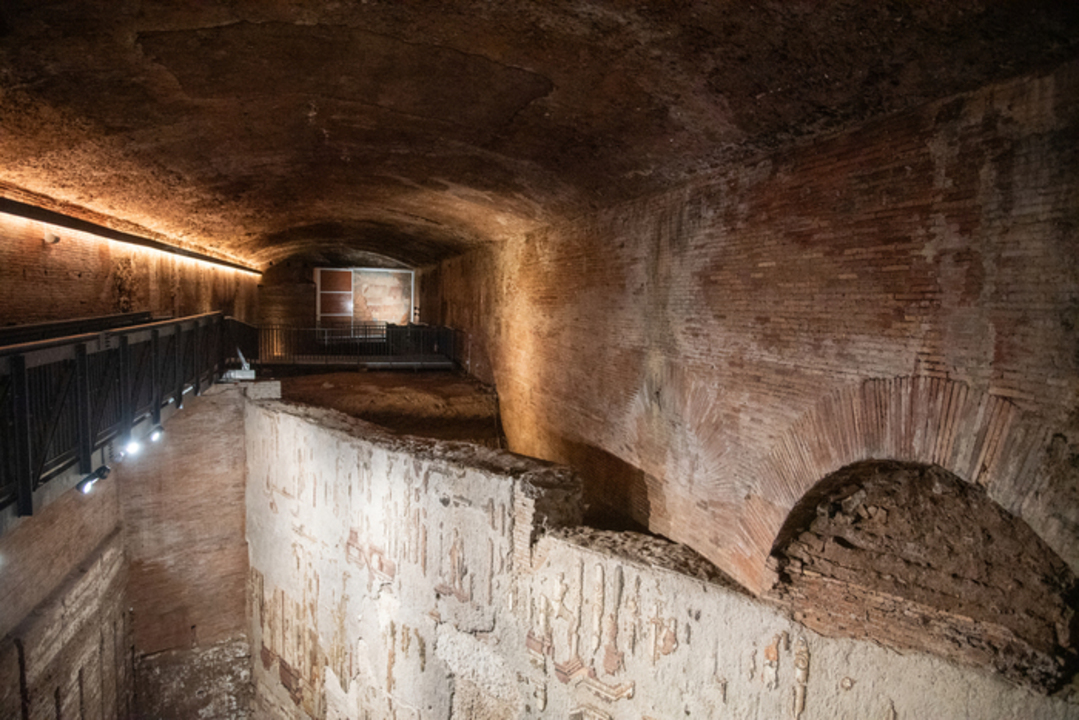
The ruins of Emperor Trajan's Baths have opened to visitors on Rome's central Oppian Hill after a dig and restoration that Rome Mayor Roberto Gualtieri said "has enabled us to return a wonderful space to the city".
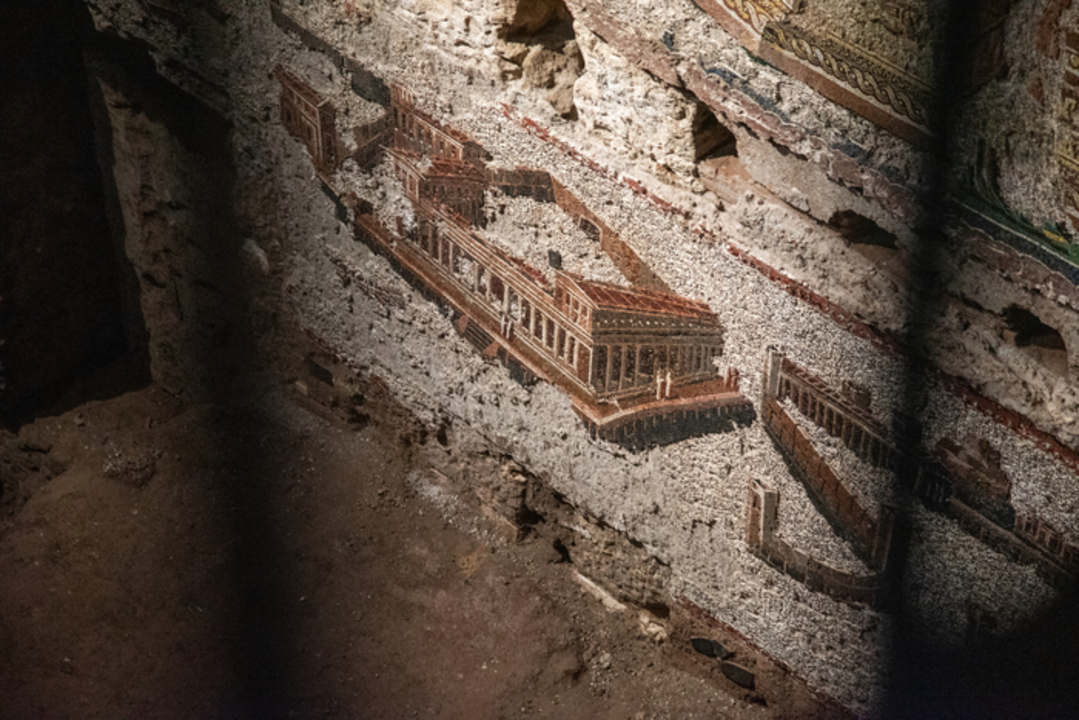
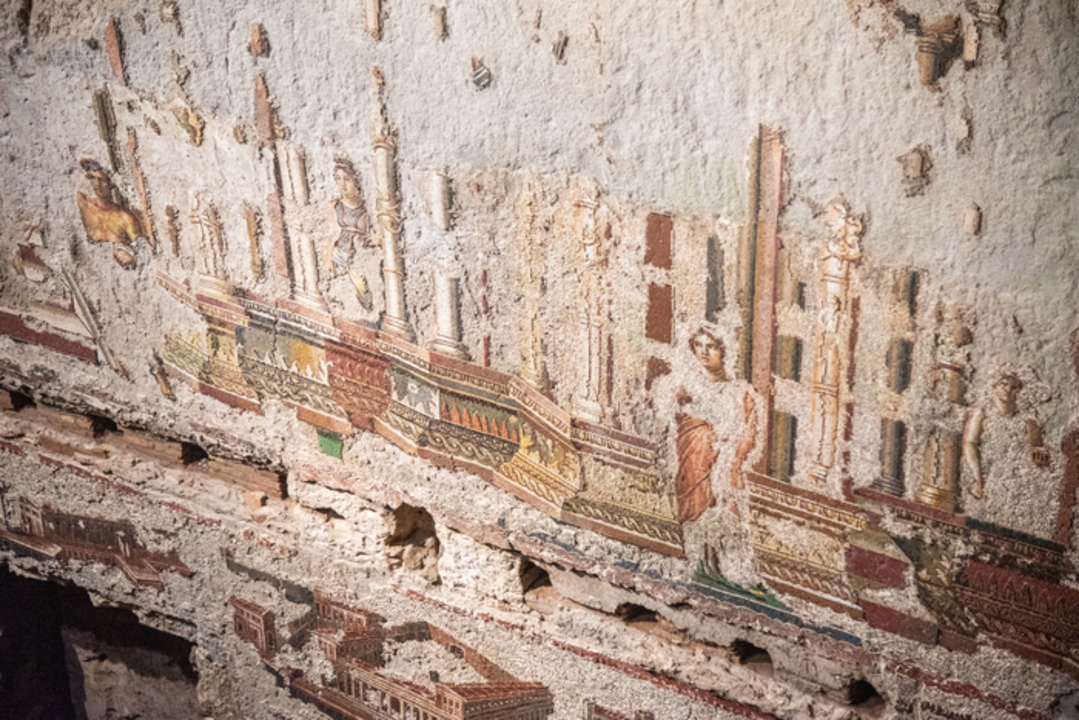
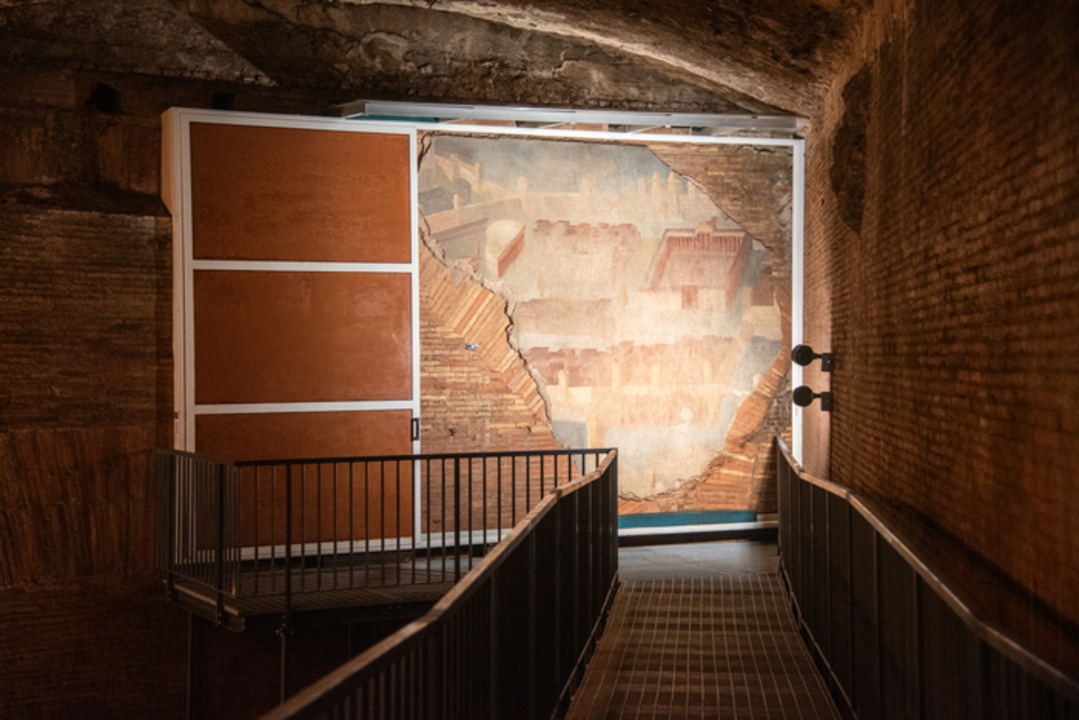
The site features the biggest mosaic ever discovered in Rome and a huge fresco illustrating buildings according to rules of perspective which would only be rediscovered 700 years later by Renaissance masters including Florentine master builder Filippo Brunelleschi.
The new museum space was unveiled Tuesday in the heart of the Oppian Hill, situated between the exedra of Trajan's Baths and the underground gallery housing the "Painted City" and the "Great Mosaic".
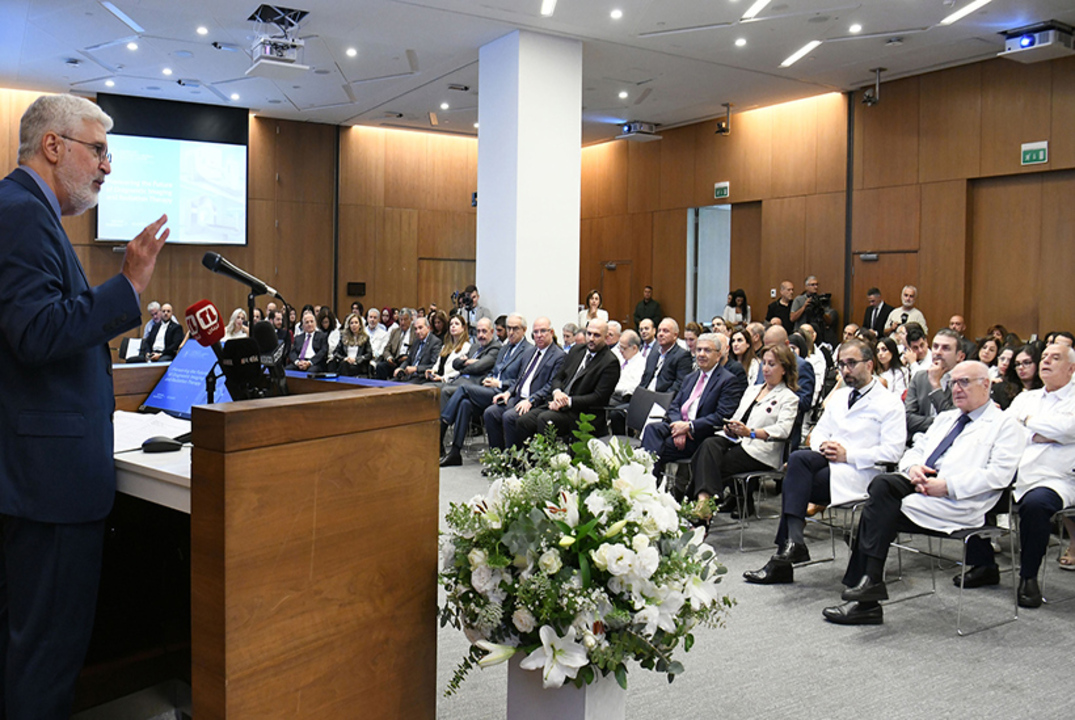
The restoration and enhancement project—carried out under the PNRR-Caput Mundi initiative—was unveiled in the presence of Gualtieri and the Capitoline Superintendent for Cultural Heritage, Claudio Parisi Presicce.
The project allows the public, for the first time, full access to certain areas and artifacts of exceptional value.
"With this project, we are returning a wonderful site in the heart of the Oppian Hill to the city and finally making it accessible, while recovering and showcasing unique traces of Rome's history. The restoration of the Painted City and the Great Mosaic, alongside new discoveries from the excavations, also speaks to the extraordinary nature of a city where any intervention on its heritage can bring new fragments of history to light and enrich our knowledge of the past," said Mayor Gualtieri.
For the mayor, this represents "an important new piece" in the ongoing effort to care for and highlight the Capital's millennia-old history. "We are aware that Rome is adding a major highlight to its wonders," Gualtieri emphasized, explaining that the two large decorative features are of particular significance "in terms of both artistic beauty and historical and documentary importance." Claudio Parisi Presicce, the Capitoline Superintendent for Cultural Heritage, described the area's complex historical layering.
"Since 1871, this has been a protected monumental area—a decision made by the city immediately after it was proclaimed the capital," he explained, highlighting how this specific status allowed the archaeological layers to be preserved.
"Here, we have a sequence of particularly interesting monuments." Subsurface investigations, begun in the area of the ancient Papal Powder Magazine, led to the discovery of an underground gallery and the remains of structures predating the Baths of Trajan. According to Parisi Presicce, some scholars believe these remains may be linked to the Domus Aurea, while others date them to a later phase—though still prior to the construction of the baths. The Baths of Trajan, designed by Apollodorus of Damascus and inaugurated on June 22, 109 AD, covered an area of approximately 60,000 square meters.
"The bath complex was an innovative model," the superintendent explained, because alongside spaces dedicated to physical care, it included a vast system of porticoes, areas for walking and sports, and spaces dedicated to culture.
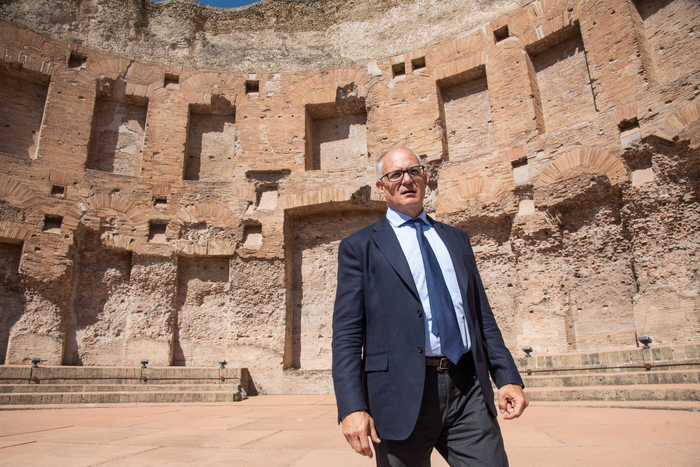
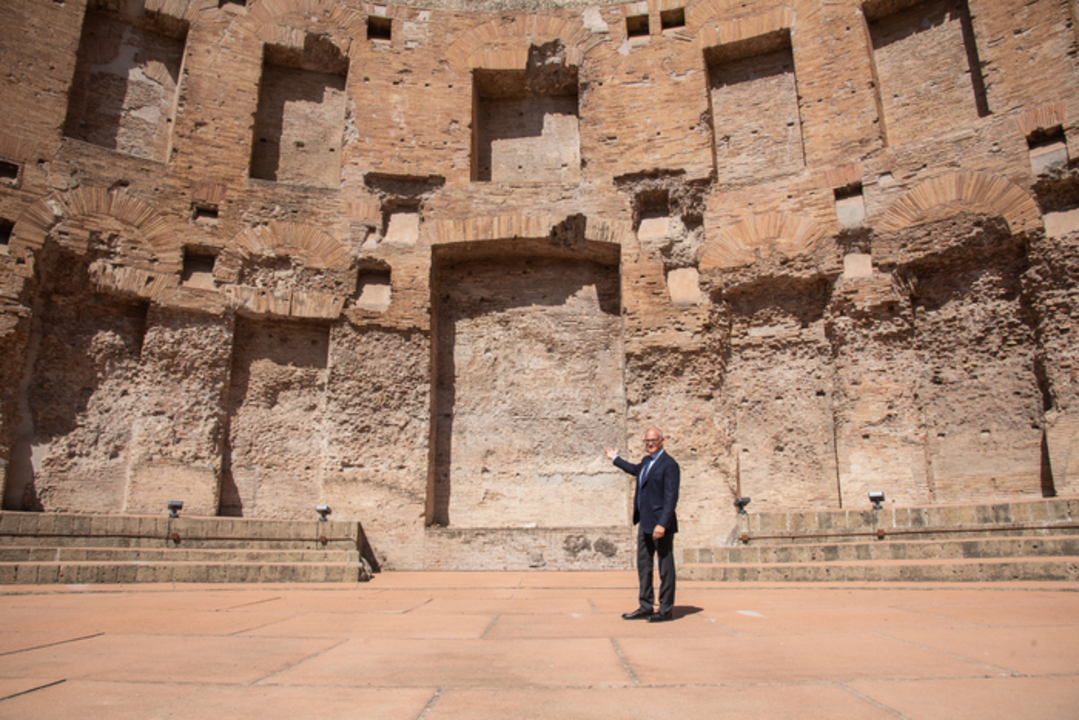
Among these was the large southwestern exedra—measuring about 30 meters in diameter—where numerous niches may have housed cabinets for documents and books.
"The restoration project envisions using these spaces for contemporary events, conferences, and concerts, ensuring the area is fully utilized," Parisi Presicce added.
Two exceptional decorative features within the underground gallery have been restored: La Città Dipinta (The Painted City)—a fresco covering approximately ten square meters and dating back to the 1st century AD—and the Grande Mosaico (Great Mosaic), a monumental wall decoration arranged in multiple registers.
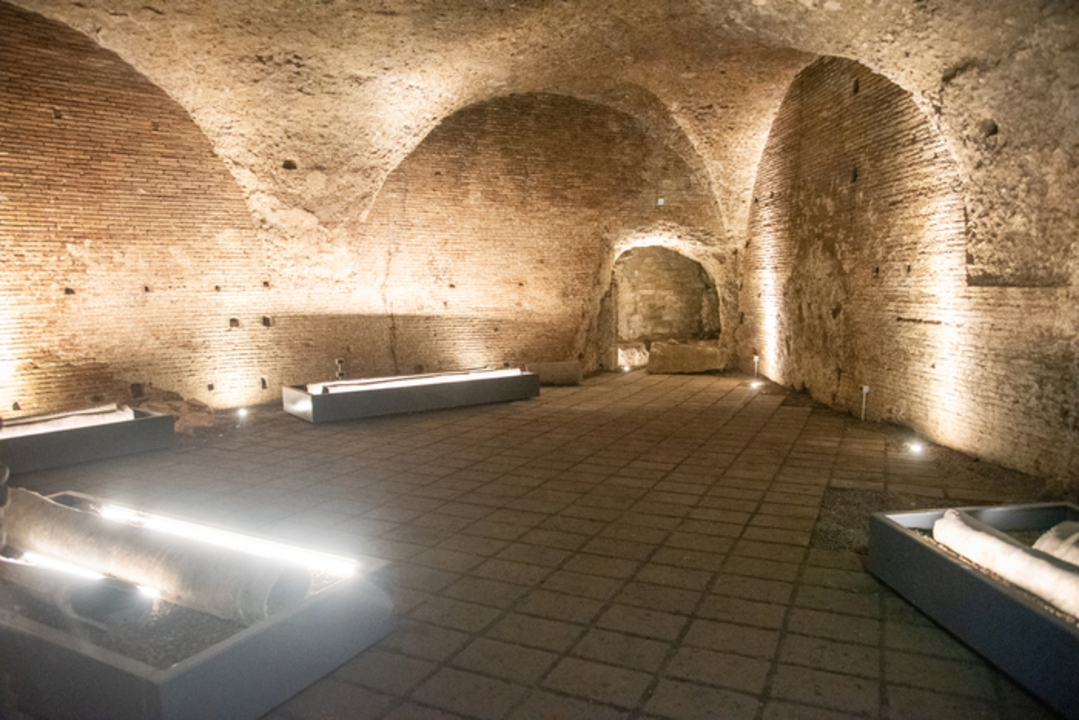
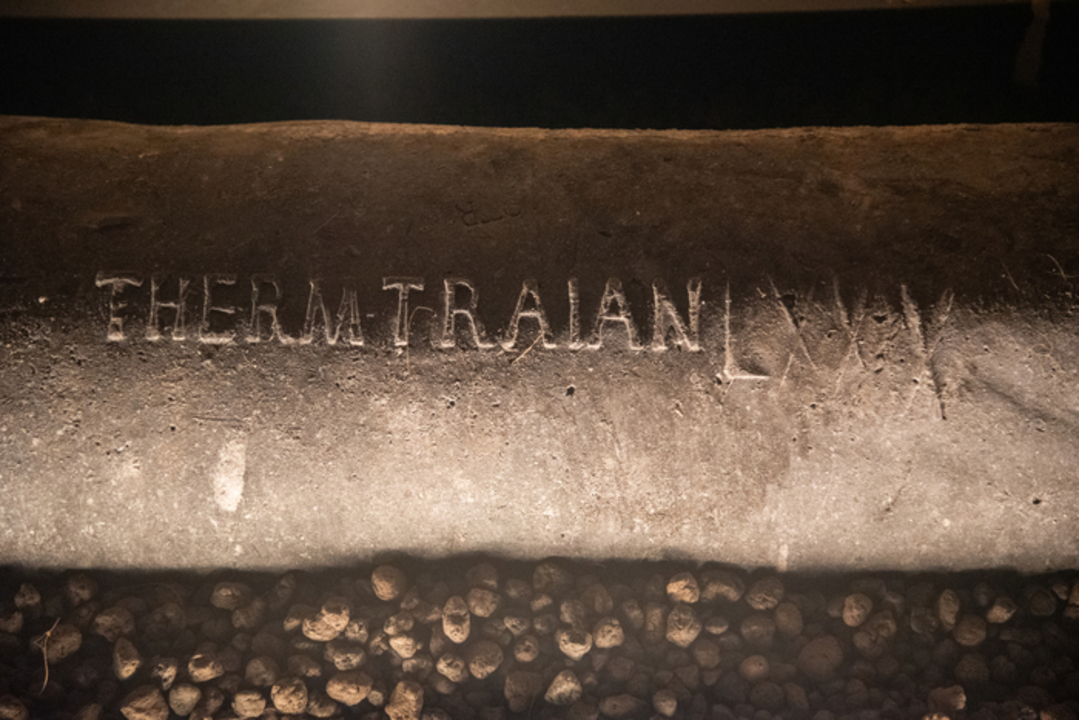
The project also involved improvements to visitor routes, including a new walkway, a reception area and bookshop, a space dedicated to fistulae (ancient lead water pipes), new green areas, lighting, tiered seating, and educational displays.
"The research is ongoing," concluded Parisi Presicce, explaining that excavations will continue to see what else the site might yield.
A trial opening to the public will take place on Saturday, September 12, and Sunday, September 13, featuring free guided tours in Italian that require a reservation.
From October 2, tours will run from Friday to Sunday, with six daily time slots—at 10:00, 11:00, 12:00, 13:00, 14:00, and 15:00—and a maximum of 15 participants per slot.
ALL RIGHTS RESERVED © Copyright ANSA