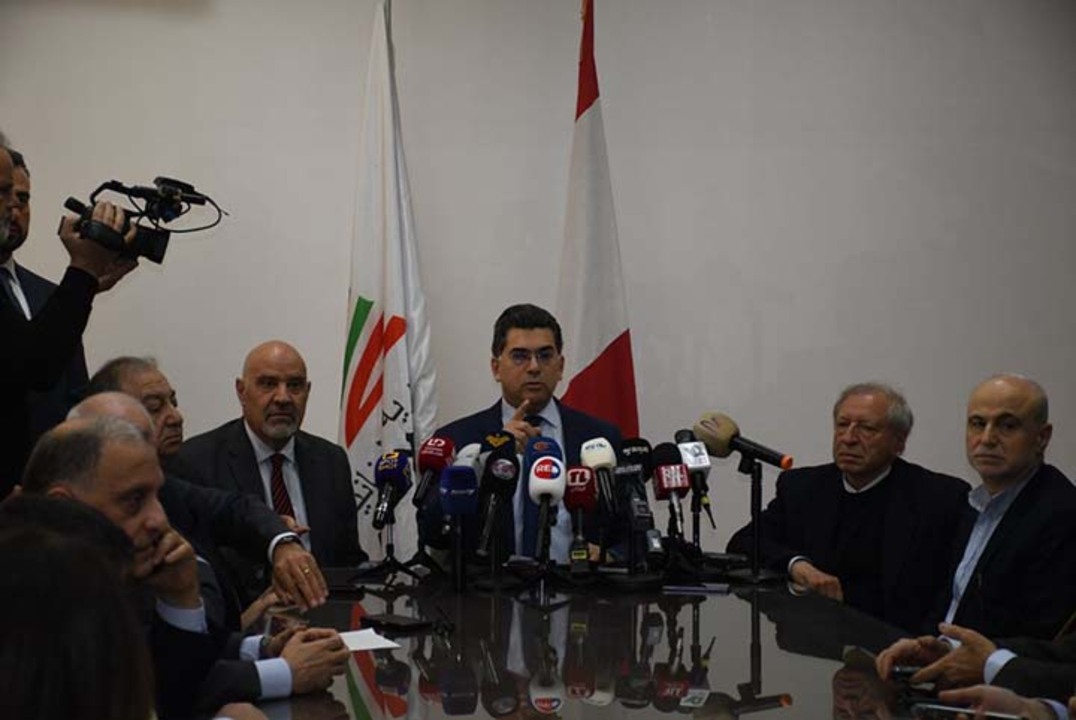
NNA - Information Minister Dr. Paul Morcos convened an emergency meeting with media institutions, upon his invitation, to discuss media discourse across various media outlets, given the delicate circumstances Lebanon is currently going through, in preservation of internal peace and stability and to prevent sectarian and inciting rhetoric.
Further meetings will also be convened with other media outlets, particularly online websites.
Today’s meeting was attended by the Chairman of the National Media Council, Abdel Hadi Mahfouz; the Dean of the Press Syndicate, Awni al-Kaaki; the Head of the Editors Syndicate, Joseph Al-Qusaifi; the Director General of the Ministry of Information, Dr. Hassan Falha; Chair of the Board of Directors and Director General of Tele Liban, Dr. Elissar Naddaf; Radio Lebanon Director, Mohammad Gharib; and representatives from print and audio visual media outlets.
The meeting began with a minute of silence, at the Minister’s request, in mourning for the martyrs of the Israeli aggression against Lebanon, particularly the martyrs of the press, especially as attendees were informed of the martyrdom of Mohammad Sherri, Director of Al-Manar TV Political Programs.
Minister Morcos then delivered a speech, thanking media professionals, deans of syndicates, directors-general, editors-in-chief, news directors, and all officials of the Ministry of Information and public and private media outlets, "for their presence and their response to this invitation at a delicate time the the country is going through, where challenges are mounting and responsibilities are increasing, especially in light of the ongoing Israeli aggression and its grave and serious repercussions on Lebanon and its people."
He added: "We meet today out of our deep belief in the pivotal national role that the media plays, not only in conveying the news, but also in contributing to the protection of society, safeguarding stability, and enhancing public awareness. The media, especially in times of hardship, tragedy, and war, is not merely a transmitter of facts, but a partner in national responsibility, and a spotlight on the country’s needs in times of war- foremost among them the needs of our people and our displaced brothers."
Minister Morcos continued: "What Lebanon is going through today requires the highest levels of wisdom and foresight. It calls upon all of us, each from his respective position, to calm tensions and avoid anything that might inflame concerns, incite unrest, or deepen divisions. Words, as you know, can be a source of reassurance and constructive engagement, but if misused, they can become a tool for tension and fragmentation. Therefore, we are confident that you will work with us to uphold the highest standards of professional and national responsibility for which you have always been known in addressing events and developments."
Morcos also emphasized "the Ministry of Information’s full and unwavering commitment to the freedom of opinion, expression, and the press- rights that are protected and guaranteed- while simultaneously stressing that this freedom is always coupled with responsibility, especially in critical times that require prioritizing the supreme national interest, as you are well aware."
He said: "We rely on your sense of patriotism, your professional expertise, and your well-known ethical commitment. We are confident that you will remain, as you always have been, at the forefront of those who protect Lebanon with bold and accurate words and through positions that are both free and responsible. Let us work together to ensure that our media is a source of strength and unity, not a cause for concern or division."
He concluded: "Just as I was keen to meet with you today, I will also meet in the coming days with all our colleagues from online websites as well as those who could not be invited today. Thank you all, and my sincere appreciation for your work and for the efforts we count on in serving Lebanon’s best interests. Lebanon is a responsibility upon all of us- let us rise above our small differences for the sake of our greater national values. Long live Lebanon with its free and responsible media."
In conclusion, a video prepared by the Ministry of Information, in cooperation with the UNESCO office in Beirut and the International Organization of La Francophonie’ regional representation in the middle east, was presented, addressing the issue of verifying false and misleading news.
Following the meeting, the attendees agreed on a set of general principles to be adopted, most notably:
• Upholding the highest standards of professional and national responsibility, for which Lebanese media has long been known in addressing events and developments.
• Refraining from broadcasting or publishing any content that could incite tensions, provoke unrest, or fuel discord.
• Thoroughly verifying information before disseminating it, particularly in light of the spread of misleading news.
• Adopting a balanced media discourse that is free from hatred and animosity, takes into account the sensitivity of the current phase and preserves civil peace and internal stability.
• Prioritizing everything that strengthens unity and solidarity among the Lebanese in the face of current challenges amid the Israeli aggression, by highlighting the needs of our displaced brothers and sisters and supporting their resilience.