ZAGREB, 16 March (Hina) - Croatia could get its first mediators with a formal higher-education background within six years, after they complete a five-year integrated university degree in mediation, which is expected to be launched next academic year at the University of Josip Juraj Strossmayer in Osijek.
The interdisciplinary programme will combine several academic fields and blend theoretical knowledge with practical skills, training experts in peaceful conflict resolution across different social and professional settings.
In Croatia, mediators currently come from a wide range of professions. Alongside legal professionals, attorneys and judges, they include professionals from business, human resources, education, healthcare, technical and social sciences, public administration and entrepreneurship.
"That interdisciplinarity is one of mediation's key strengths because it enables a better understanding of different types of conflict," said Suzana Fugaj, head of the Croatian Mediation Association (HUM).
More than 1,200 mediators are listed in the official Register of Mediators, but most practise mediation only as a secondary professional activity, Fugaj noted, adding that systematic academic education in the field is still lacking.
According to HUM's 2025 report, only 15 mediators were actively conducting mediations within the association. Mediation today is used in a wide range of disputes -- from civil, commercial and family cases to labour and neighbour disputes. It is particularly common in business and employment relations, as well as in specialised areas such as maritime and consumer disputes.
"In practice, mediation is increasingly used in schools, local communities, healthcare institutions and organisations, not only to resolve disputes but also to improve communication and prevent conflicts," Fugaj said.
New law to expand mediation
Despite the growing practice, mediation is still rarely a primary profession. Experts say this reflects the relatively short tradition of institutional mediation in Croatia and its development as an interdisciplinary practice.
Mediator training has so far relied mainly on specialised professional courses run by authorised institutions, combining theory and practical exercises followed by additional training and continuous professional development.
Mediation is currently regulated by the Act on Peaceful Dispute Resolution, while a new Mediation Act is in the process of being adopted. The proposed law would require parties in certain cases to attempt mediation before filing a lawsuit. If mediation fails, parties who participated in the process would be exempt from court filing fees.
The draft legislation also aims to strengthen the institutional framework. The Centre for Peaceful Dispute Resolution would continue to operate as the National Mediation Centre, and mediation procedures for citizens would be free of charge.
Mediator status is obtained by completing basic training and registering in the official Register of Mediators, but experts say the profession would benefit from a stronger academic foundation.
"Mediation is not just a legal or procedural tool but a complex social skill involving psychological, communication, organisational and ethical dimensions," Fugaj said.
First mediation programme in Croatia
In that context, the University of Josip Juraj Strossmayer in Osijek has launched an initiative to establish the first university mediation programme in Croatia.
The project is part of the university's strategy to develop new interdisciplinary study programmes. The initiative was proposed by the Catholic Faculty of Theology in Đakovo, with participation from the faculties of law, humanities, education sciences and the Academy of Arts and Culture.
The programme is currently in the final stage of preparation and initial accreditation. It is designed as a five-year integrated undergraduate and graduate programme, awarding the degree of Master of Mediation.
The curriculum will combine interdisciplinary knowledge of conflict, communication, legal frameworks and the psychological, philosophical and ethical aspects of mediation, while placing strong emphasis on practical training and negotiation skills.
Students will take part in simulated mediation procedures and professional placements, allowing them to gain practical experience during their studies.
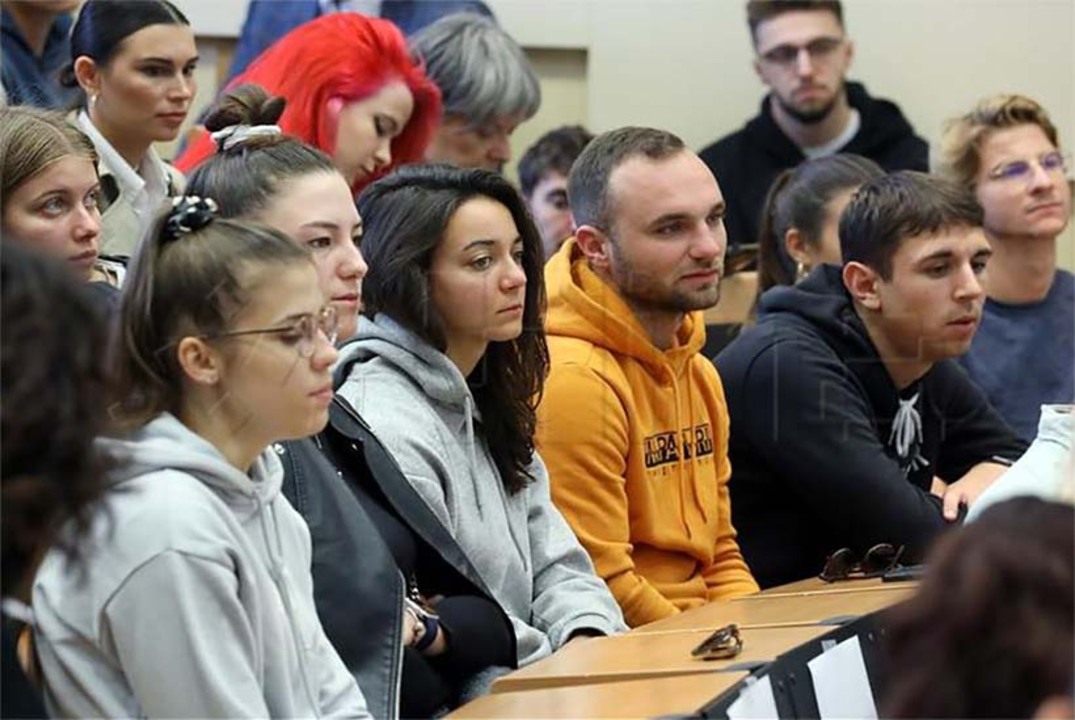
The planned enrolment quota is 30 students per year, and the university expects interest from candidates from the public sector, NGOs, education and business.
"Mediation does not resolve only legal disputes but primarily human relationships, communication and trust," Fugaj said. "Its development contributes not only to more efficient dispute resolution but also to building a culture of dialogue in society."
Srđan Baković
Izvršni urednik
Hrvatska izvještajna novinska agencija (HINA)