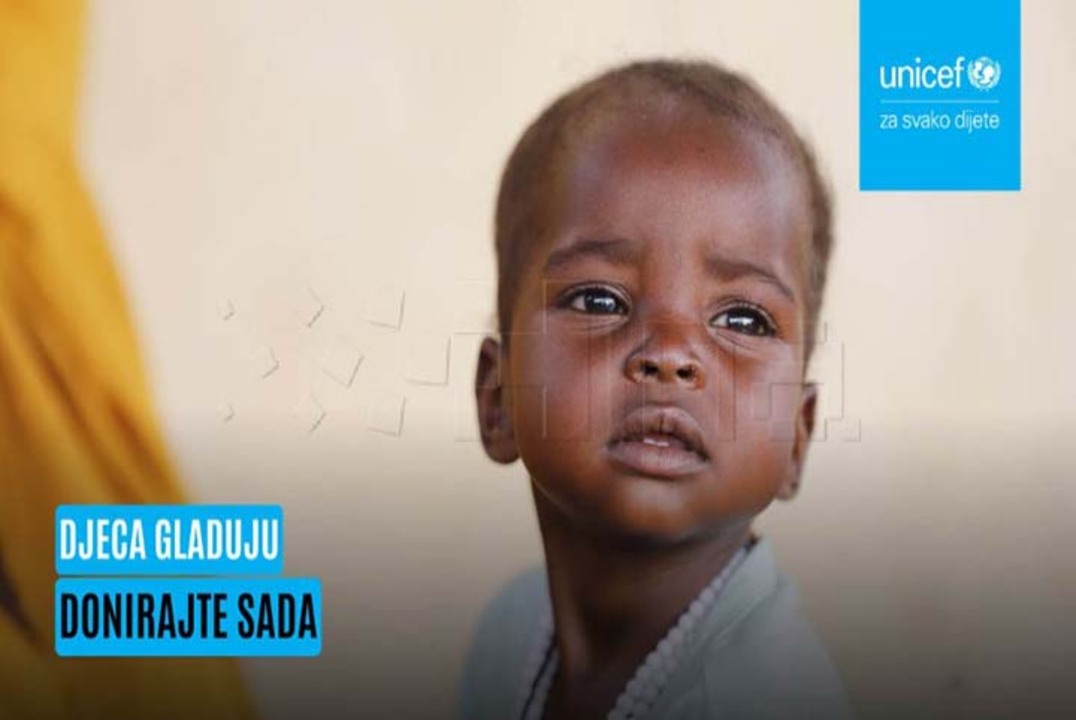
ZAGREB, 25 Feb (Hina) - UNICEF Croatia has launched a humanitarian campaign to help starving children in Sudan, Yemen and Gaza, warning that a record number of children worldwide will require humanitarian assistance in 2026 as hunger, poverty and violence continue to rise.
According to UNICEF, millions of children suffer from severe, life-threatening malnutrition, which is estimated to cause one in five deaths among children under five, making it one of the gravest threats to child survival.
Prolonged armed conflicts and extreme weather further restrict access to food and basic services, despite families' efforts to protect their children's health.
The situation is particularly severe in Sudan, described as a forgotten crisis with millions of displaced children and their families; in Yemen, where millions of children and women face chronic food shortages; and in Gaza Strip, where famine was officially confirmed in August 2025.
Across these crisis areas, nearly eight million children face catastrophic levels of malnutrition. In Gaza, deaths caused by hunger have been recorded amid destroyed infrastructure and restricted humanitarian access.
UNICEF says its field teams witness growing daily needs for healthcare, safe drinking water and therapeutic food, and are striving to respond, but the situation is deteriorating rapidly and requires more assistance than ever.
Citizens have been urged to show solidarity and help secure urgently needed therapeutic food. UNICEF provides 80 per cent of the world's specially developed life-saving therapeutic food, treatment that can mean the difference between life and death within days.
Malnutrition seriously threatens children's survival, growth and development, caused not only by a lack of food but also by inadequate diets, disease, limited access to safe water and insufficient healthcare. Timely treatment of severe acute malnutrition is crucial to saving children's lives.
Donations are being collected to provide food and support malnutrition treatment centres and mobile teams in hard-to-reach areas. Further information is available at unicef.hr.