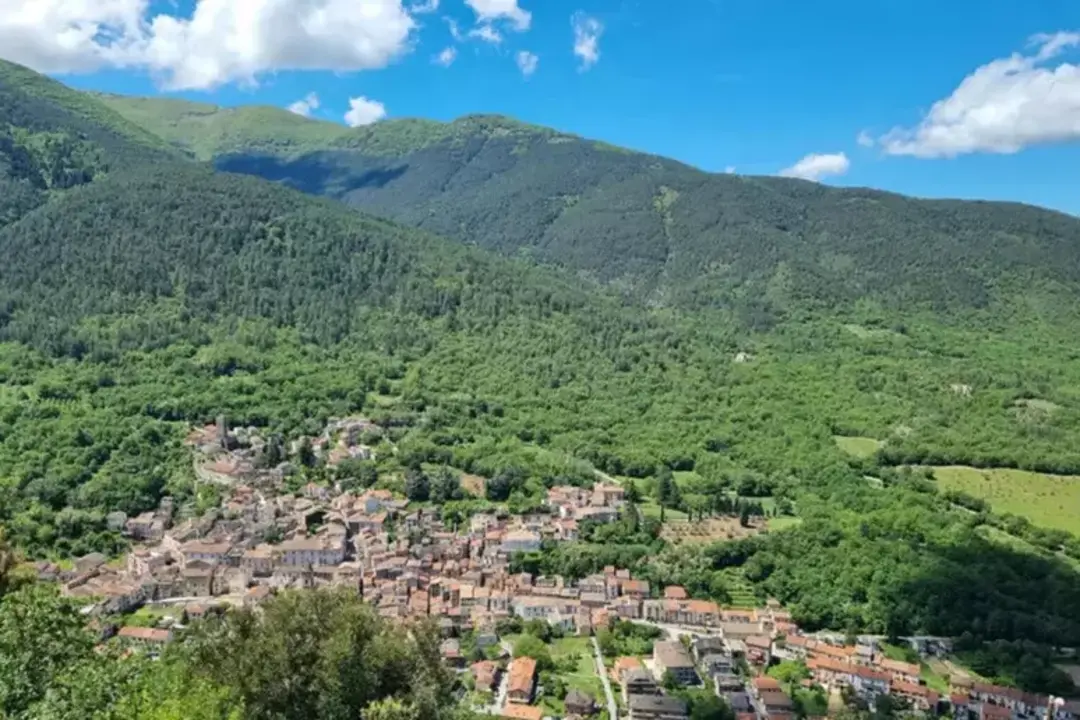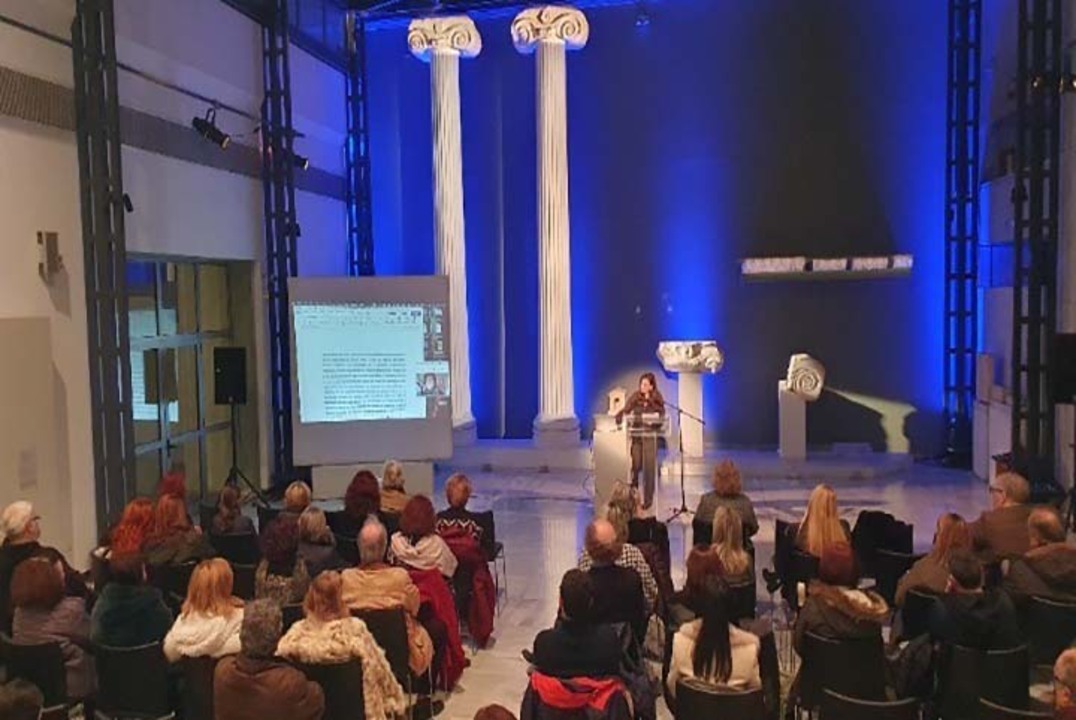
The Sanctuary of the Virgin at Ancient Neapolis, the patron goddess of ancient Neapolis, founded by Thasian settlers in the 7th century BC on the rocky peninsula of Panagia (today's old city of Kavala), continues centuries later to reveal many of its hidden secrets. The occasion for the disclosure of these secrets is the official presentation of the two volumes ("The Sanctuary of the Virgin in Ancient Neapolis. Engraved and Written Ceramic Inscriptions from the Sanctuary and Aegean Thrace" and the collective volume on "Ceramics, Stone Inscriptions and Small Finds") edited by Amalia Avramidou, Associate Professor of Classical Archaeology at the Democritus University of Thrace (DUTH).
The two elegant volumes, written in English, were published by the publishing house Brepols and discuss the characteristics of the goddess Parthenos, the cult practices that took place in the sanctuary, its importance as a political centre of ancient Neapolis and its role in the trade networks of the Aegean, highlighting the cosmopolitan character of the imposing sanctuary.
The impressive Ionic columns and capitals of the Ionic temple pavilion that adorned the sanctuary in the 5th century BC, which today dominate the new wing of the Archaeological Museum of Kavala, testify to the uniqueness and importance of this sanctuary in the wider region of Macedonia. At the same time, the two volumes present and interpret a very large number of movable archaeological finds from the excavations that have remained largely unpublished over the years.
The head of the Ephorate of Antiquities of Kavala, Stavroula Dadaki, speaking to the Athens-Macedonian News Agency (ANA-MPA), referred to the importance of the sanctuary, underlining that "the sanctuary of the Virgin is often mentioned in the bibliography, as its findings (Attic, Corinthian, Oriental pottery) are important in the study of the pottery of the archaic period and because it includes evidence for the existence of an early stone pavilion of the Ionic style of a temple in Greece, where the Doric style was dominant."
The importance of the sanctuary of the Virgin in Aegean Thrace
"We do not have many surviving examples of archaic Ionic temples in Greece," Dadaki pointed out to ANA-MPA and added, "the most important is the Heraion of Samos. There is a temple of Artemis on Delos, the temple of Dionysus on Naxos which was restored with the participation of Manolis Korres. The capitals and columns from the sanctuary of the Virgin are estimated to have been five meters high and testify to the existence of an important architecture. For this reason, the Archaeological Museum of Kavala is included in the educational programmes of students as they study the capitals which are of interest for the evolution of the form of Ionic capitals. The publication of the material edited by Ms. Avramidou is therefore particularly important, as with these two volumes the sanctuary is now included in the manuals on ancient sanctuaries."
In her opening speech at the event for the presentation of the volumes, Dadaki emphasised that "the arrival in 1933 in Kavala of the first curator of antiquities, Georgios Bakalakis, mobilised the city to gather the scattered ancient material that had been preserved in walls, courtyards and inns," underlining the importance of the first funding from the municipality of Kavala, amounting to 2,000 drachmas, and the cooperation between local authorities and scientists.
Dadaki vividly described the progress of the rescue excavations, noting that "the sanctuary of the Virgin offers an exceptional gateway to the ancient world, with a lifespan of at least from the late 6th to the 4th century BC, while the collection of movable finds that has been gathered over the years in the museum’s warehouses is large and very important."
"Bakalakis' publication in 1936, entitled Neapolis - Christoupolis-Kavala, connected Kavala with ancient Neapolis for the first time with irrefutable evidence, documenting the unbroken continuity of the city," emphasised the head of the Ephorate of Antiquities of Kavala.